


Temperature is a crucial factor that can significantly influence the performance of titanium anodes. As a reliable titanium anode supplier, I have witnessed firsthand how temperature variations can impact the efficiency, durability, and overall effectiveness of these anodes in various applications. In this blog post, I will delve into the intricate relationship between temperature and the performance of titanium anodes, exploring the underlying mechanisms and practical implications.
1. Electrochemical Reaction Kinetics
At the heart of a titanium anode's operation are electrochemical reactions. Temperature plays a pivotal role in determining the rate of these reactions. According to the Arrhenius equation, the rate constant (k) of a chemical reaction is exponentially related to temperature (T). The equation is given by (k = A e^{-E_a/RT}), where (A) is the pre - exponential factor, (E_a) is the activation energy, (R) is the gas constant, and (T) is the absolute temperature.
As the temperature increases, the kinetic energy of the reactant molecules rises. This leads to more frequent and energetic collisions between the reactants, increasing the probability of successful reactions. In the context of titanium anodes, for example, in an electro - chlorination process where chloride ions are oxidized to produce chlorine gas at the anode surface, a higher temperature can accelerate the oxidation reaction. This results in an increased production rate of the desired product, enhancing the anode's performance in terms of efficiency.
However, it's important to note that extremely high temperatures can also lead to side reactions. For instance, in some aqueous electrolytes, water oxidation may become more favorable at elevated temperatures, competing with the main reaction and reducing the selectivity of the anode.
2. Conductivity of the Electrolyte
The conductivity of the electrolyte in which the titanium anode operates is also strongly affected by temperature. Generally, the conductivity of an electrolyte increases with increasing temperature. This is because as the temperature rises, the mobility of ions in the electrolyte improves. Ions can move more freely through the solution, reducing the resistance to the flow of electric current.
In an electrochemical cell with a titanium anode, a higher electrolyte conductivity means lower ohmic losses. Ohmic losses are the energy dissipated as heat due to the resistance of the electrolyte. By reducing these losses, more of the electrical energy supplied to the cell can be used for the desired electrochemical reactions at the anode. This leads to an improvement in the overall energy efficiency of the system.
For example, in a Mesh Titanium Anode for Sewage Treatment, which is often used in wastewater treatment processes, a warmer electrolyte can enhance the anode's ability to oxidize pollutants in the water. The increased conductivity allows for a more uniform distribution of current over the anode surface, ensuring more effective treatment of the sewage.
3. Coating Integrity and Stability
Most titanium anodes are coated with a catalytic layer to enhance their electrochemical performance. The integrity and stability of this coating are highly sensitive to temperature. At low temperatures, the coating may become brittle, which can lead to cracking and delamination over time. These physical damages can expose the underlying titanium substrate, which may then passivate and lose its electrochemical activity.
On the other hand, high temperatures can cause thermal expansion of the coating and the titanium substrate. If the coefficients of thermal expansion of the coating and the substrate are significantly different, this can generate internal stresses within the anode structure. These stresses can also lead to coating cracking and detachment.
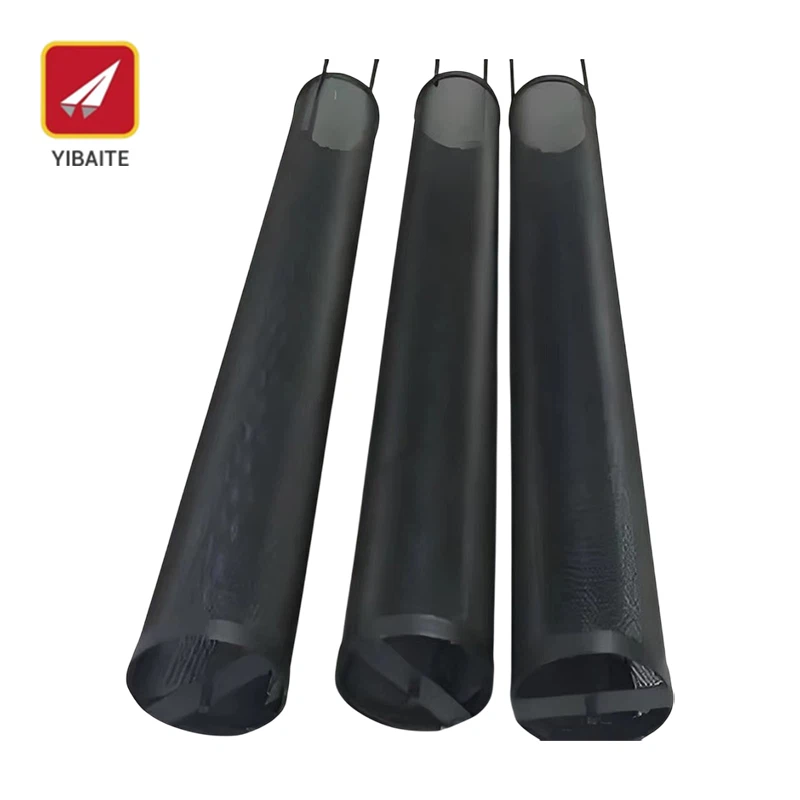
Moreover, high temperatures can accelerate chemical reactions between the coating and the electrolyte or other components in the system. This may result in the degradation of the catalytic properties of the coating, reducing the anode's performance. For example, in a Tubular Sodium Hypochlorite Generator Titanium Anode, the coating is designed to catalyze the production of sodium hypochlorite. If the temperature is too high, the coating may be corroded or its catalytic activity may be reduced, leading to a decrease in the production rate of sodium hypochlorite.
4. Gas Evolution and Bubble Formation
In many electrochemical processes involving titanium anodes, gas evolution occurs at the anode surface. Temperature can affect the behavior of gas bubbles formed during these processes. At higher temperatures, the solubility of gases in the electrolyte decreases. This means that gas bubbles are more likely to form and detach from the anode surface more quickly.
The presence of gas bubbles on the anode surface can have both positive and negative effects. On one hand, rapid bubble detachment can prevent the formation of a gas film that could otherwise block the anode surface and increase the resistance. This helps to maintain a high current density and efficient operation of the anode. On the other hand, if the bubble formation is too vigorous, it can cause mechanical stress on the anode coating, potentially leading to coating damage.

5. Practical Considerations for Different Applications
Sewage Treatment
In sewage treatment applications using Mesh Titanium Anode for Sewage Treatment, the temperature of the sewage can vary depending on the season and the location. In colder climates, the lower temperature may slow down the electrochemical reactions and reduce the electrolyte conductivity. This can lead to a decrease in the treatment efficiency. To counteract this, heating the sewage or using anodes with more active coatings may be necessary. In warmer climates, while the reaction kinetics and electrolyte conductivity are improved, care must be taken to ensure the stability of the anode coating.
Sodium Hypochlorite Generation
For Tubular Sodium Hypochlorite Generator Titanium Anodes, maintaining an optimal temperature is crucial for efficient production. A temperature that is too low can result in a slow production rate, while a temperature that is too high can cause coating degradation and side reactions. Manufacturers often recommend a specific temperature range for the operation of these anodes to achieve the best performance.
Electrolytic Plating
In electrolytic plating processes using Platinum Square Titanium Electrolytic Plate, temperature affects the quality of the plating. A proper temperature ensures uniform deposition of the metal on the substrate. If the temperature is too low, the plating rate may be slow and the coating may be uneven. If the temperature is too high, the plating bath may become unstable, and the anode coating may be damaged.
6. Conclusion and Call to Action
In conclusion, temperature has a profound impact on the performance of titanium anodes. It affects electrochemical reaction kinetics, electrolyte conductivity, coating integrity, gas evolution, and the overall efficiency and durability of the anode in various applications. As a titanium anode supplier, we understand the importance of considering temperature when selecting and using our products.
We offer a wide range of high - quality titanium anodes suitable for different temperature conditions and applications. Our technical team can provide expert advice on optimizing the performance of our anodes based on your specific temperature requirements. Whether you are in the sewage treatment, sodium hypochlorite generation, or electrolytic plating industry, we are committed to providing you with the best solutions.
If you are interested in learning more about our titanium anodes or would like to discuss your specific needs, please feel free to contact us. We look forward to the opportunity to collaborate with you and help you achieve the best results in your electrochemical processes.
References
- Bard, A. J., & Faulkner, L. R. (2001). Electrochemical Methods: Fundamentals and Applications. Wiley.
- Newman, J., & Thomas --Alyea, K. E. (2004). Electrochemical Systems. Wiley - Interscience.
- Trasatti, S. (Ed.). (1980). Electrodes of Conductive Metallic Oxides. Elsevier.