


Hey there! As a titanium anode supplier, I've seen firsthand how the overpotential at a titanium anode can have a huge impact on its performance. In this blog post, I'm going to break down what overpotential is, how it affects titanium anodes, and why it matters for your applications.
Let's start with the basics. Overpotential is the extra voltage that's needed to drive an electrochemical reaction at an electrode beyond the equilibrium potential. In simpler terms, it's the "push" required to make the reaction happen faster than it would naturally. There are a few reasons why overpotential occurs. One major factor is the resistance within the electrolyte and at the electrode - electrolyte interface. When ions move through the electrolyte or react at the electrode surface, they encounter resistance, which requires additional voltage to overcome.
Now, let's talk about how overpotential specifically affects titanium anodes. Titanium is a popular choice for anodes because it's highly corrosion - resistant, has good mechanical properties, and can support a variety of electrocatalytic coatings. But overpotential can still throw a wrench in its performance.
First off, high overpotential means more energy consumption. When you need to apply extra voltage to drive the reaction, it directly translates to higher electricity bills. In industrial applications where large - scale electrolysis is taking place, this can add up to a significant cost over time. For example, in Tubular Sodium Hypochlorite Generator Titanium Anode systems, a high overpotential at the titanium anode can lead to increased power usage during the generation of sodium hypochlorite, which is used for water disinfection.
Secondly, overpotential can cause increased wear and tear on the anode. The extra voltage can lead to more intense electrochemical reactions at the anode surface. This can accelerate the degradation of the electrocatalytic coating on the titanium anode. The coating is crucial as it provides the active sites for the desired electrochemical reactions. Once the coating starts to break down, the anode's efficiency drops, and it may even fail prematurely.
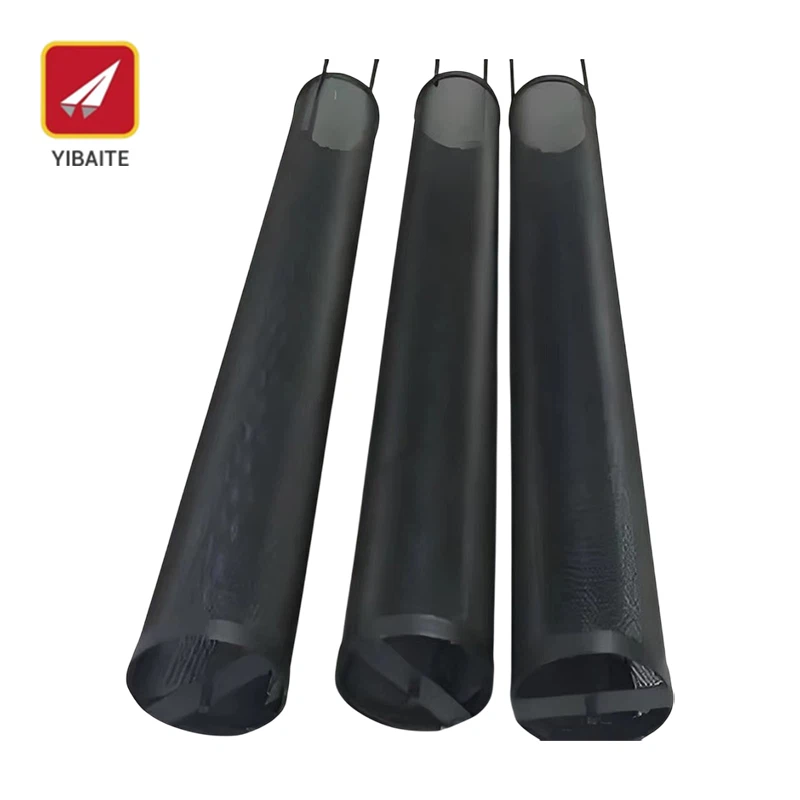

Another aspect is the impact on the reaction selectivity. In some cases, high overpotential can cause side reactions to occur. For instance, in Titanium Anode for Aluminum Foil Formation, the goal is to form a uniform oxide layer on the aluminum foil. But if the overpotential at the titanium anode is too high, it might lead to the formation of unwanted by - products or non - uniform oxide layers, which can affect the quality of the final aluminum foil product.
So, how can we manage overpotential to improve the performance of titanium anodes? One approach is to optimize the electrocatalytic coating. By choosing the right coating materials and applying them in the right way, we can reduce the overpotential. For example, some advanced coatings have high electrocatalytic activity, which means they can lower the energy barrier for the desired reaction, thus reducing the need for extra voltage.
The design of the anode also plays a role. A well - designed anode can improve the mass transfer of ions at the electrode - electrolyte interface. This reduces the resistance and, in turn, the overpotential. For example, using a porous or structured anode design can increase the surface area available for the reaction, allowing ions to reach the active sites more easily.
The electrolyte composition is another key factor. By adjusting the concentration of ions, the pH, and other properties of the electrolyte, we can influence the overpotential. For example, in Titanium Anode for Electrolysis Metallurgy, the right electrolyte composition can help to ensure smooth ion transfer and reduce the overpotential during the metal extraction process.
As a titanium anode supplier, I understand that every application has its unique requirements. Whether you're in the water treatment industry, the aluminum foil manufacturing sector, or the metallurgy field, getting the overpotential under control is crucial for optimal performance.
If you're looking for high - quality titanium anodes that are designed to minimize overpotential and maximize performance, you're in the right place. Our team of experts can work with you to understand your specific needs and recommend the best anode solutions. We offer a wide range of titanium anodes with different coatings and designs to suit various applications.
Don't let overpotential eat into your profits or compromise the quality of your products. Contact us today to start a conversation about how our titanium anodes can meet your requirements. We're here to help you find the most efficient and cost - effective solutions for your electrochemical processes.
References
- Bard, A. J., & Faulkner, L. R. (2001). Electrochemical Methods: Fundamentals and Applications. Wiley.
- Conway, B. E. (1999). Electrochemical Supercapacitors: Scientific Fundamentals and Technological Applications. Kluwer Academic Publishers.