


As a seasoned supplier of titanium anodes, I've witnessed firsthand the growing demand for energy - efficient solutions in various industries. Titanium anodes are widely used in applications such as sewage treatment, sodium hypochlorite generation, and electrolysis processes. Improving their energy efficiency not only reduces operational costs but also contributes to a more sustainable future. In this blog, I'll share some effective strategies to enhance the energy efficiency of titanium anodes.
1. Optimize Coating Materials and Processes
The coating on a titanium anode plays a crucial role in determining its energy efficiency. A high - quality coating can lower the overpotential, which is the extra voltage required to drive an electrochemical reaction. This reduction in overpotential directly translates to less energy consumption.
We offer a range of advanced coating materials that are specifically designed to improve energy efficiency. For example, our Mesh Titanium Anode for Sewage Treatment is coated with a special mixture of metal oxides. These oxides have excellent electrocatalytic properties, which can significantly reduce the energy needed for the oxidation of pollutants in sewage.
The coating process also matters. Precise control of the coating thickness, uniformity, and porosity can enhance the anode's performance. We use state - of - the - art coating techniques to ensure that each anode has a consistent and high - quality coating. This not only improves energy efficiency but also extends the anode's service life.
2. Design for Optimal Geometry
The geometric design of a titanium anode can have a substantial impact on its energy efficiency. Anodes with a larger surface area can provide more reaction sites, which allows for a higher current density at a lower voltage. This means that more electrochemical reactions can occur with less energy input.
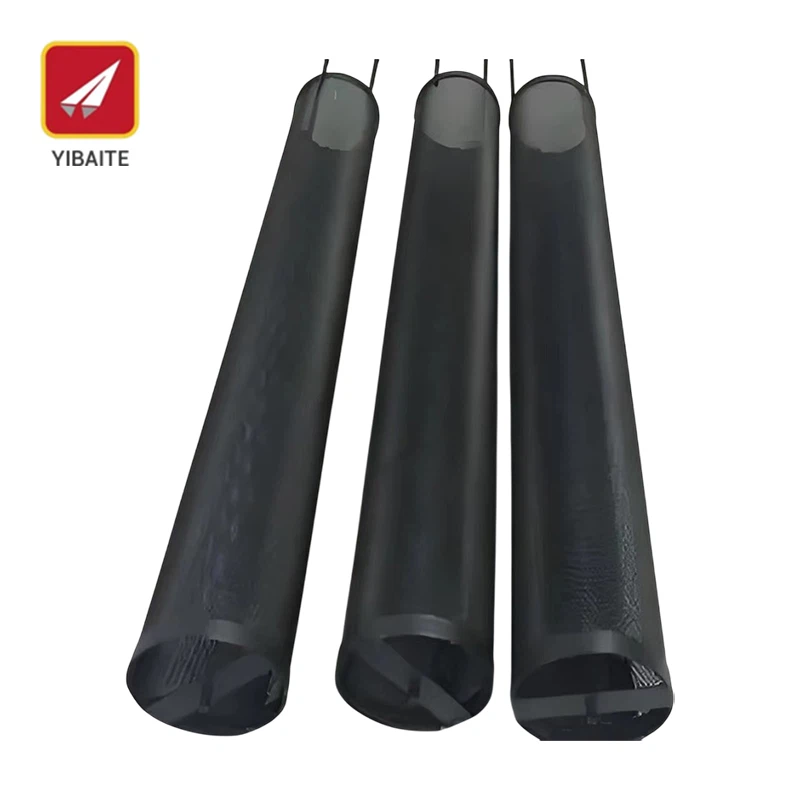
Our Tubular Sodium Hypochlorite Generator Titanium Anode is designed with a tubular shape. This design maximizes the surface area exposed to the electrolyte, enabling efficient generation of sodium hypochlorite with reduced energy consumption. The tubular structure also promotes better electrolyte flow, which helps to maintain a uniform reaction environment and further improves energy efficiency.
In addition, the spacing between anodes and cathodes in an electrolytic cell should be carefully optimized. If the distance is too large, the resistance in the electrolyte will increase, requiring more energy to drive the current. On the other hand, if the distance is too small, it may lead to short - circuits or uneven current distribution. Our engineering team conducts detailed simulations and experiments to determine the optimal anode - cathode spacing for different applications.
3. Monitor and Control Operating Conditions
Maintaining the right operating conditions is essential for achieving high energy efficiency in titanium anodes. Temperature, pH, and electrolyte concentration can all affect the anode's performance.
Temperature has a significant impact on the electrochemical reactions occurring at the anode. In general, increasing the temperature can reduce the activation energy of the reactions, which may improve energy efficiency. However, excessive temperatures can also cause the coating to degrade more quickly. Therefore, it's important to find the optimal temperature range for each application. We provide temperature - control systems that can precisely regulate the temperature in the electrolytic cell.
The pH of the electrolyte can also influence the anode's performance. Different electrochemical reactions have different optimal pH ranges. For example, in some applications, a slightly acidic electrolyte may be more favorable for the oxidation reactions at the anode. We offer pH - monitoring and adjustment equipment to ensure that the electrolyte pH remains within the optimal range.

Electrolyte concentration is another critical factor. A proper electrolyte concentration can ensure good conductivity and a stable reaction environment. If the concentration is too low, the resistance in the electrolyte will increase, leading to higher energy consumption. Conversely, if the concentration is too high, it may cause precipitation or other side reactions. We recommend regular monitoring of the electrolyte concentration and adjusting it as needed.
4. Implement Energy - Saving Technologies
There are several energy - saving technologies that can be integrated with titanium anodes to further improve their efficiency. One such technology is the use of pulse electrolysis. Instead of applying a continuous direct current, pulse electrolysis applies a series of short - duration pulses. This can reduce the overpotential and improve the current efficiency, resulting in energy savings.
Another technology is the use of renewable energy sources. Solar panels or wind turbines can be used to power the electrolytic cells with titanium anodes. This not only reduces the reliance on traditional energy sources but also makes the overall process more sustainable. We can provide customized solutions to integrate renewable energy systems with our titanium anodes.
5. Regular Maintenance and Inspection
Regular maintenance and inspection of titanium anodes are crucial for maintaining their energy efficiency. Over time, the anode coating may wear out, and the anode surface may accumulate impurities. These factors can increase the resistance and overpotential, leading to higher energy consumption.
We recommend regular visual inspections of the anodes to check for signs of coating damage or corrosion. If any issues are detected, prompt repairs or replacements should be carried out. In addition, the anodes should be cleaned periodically to remove any deposits on the surface. We offer maintenance services and cleaning solutions to help our customers keep their anodes in optimal condition.
Conclusion
Improving the energy efficiency of titanium anodes is a multi - faceted challenge that requires a combination of optimized coating materials, proper geometric design, precise control of operating conditions, implementation of energy - saving technologies, and regular maintenance. As a leading supplier of titanium anodes, we are committed to providing our customers with high - quality products and comprehensive solutions to meet their energy - efficiency needs.
If you're interested in learning more about our titanium anodes or discussing how we can help you improve the energy efficiency of your electrochemical processes, please don't hesitate to contact us for procurement and further discussions. We look forward to working with you to achieve a more energy - efficient and sustainable future.
References
- Bard, A. J., & Faulkner, L. R. (2001). Electrochemical Methods: Fundamentals and Applications. John Wiley & Sons.
- Conway, B. E. (1999). Electrochemical Supercapacitors: Scientific Fundamentals and Technological Applications. Kluwer Academic Publishers.
- Trasatti, S. (1980). Electrodes of Conductive Metallic Oxides. Elsevier.