


Every titanium cup, every precision-formed component, every welded tube starts as a coil of titanium strip. But getting from raw titanium sponge to a finished strip coil takes a long, demanding journey.
It Starts with Sponge Titanium - Not Sheet Metal
Titanium strip is not rolled from a single slab of metal. The process begins with titanium sponge - a porous, lightweight mass produced by the Kroll process (reduction of TiCl₄ with magnesium). This sponge is the purest form of titanium - but it cannot be used directly.
| Step | Process | Why It Matters |
|---|---|---|
| 1. Electrode pressing | Sponge is compacted into electrode blocks | Creates a dense feedstock suitable for melting |
| 2. Vacuum arc remelting (VAR) | Electrodes are melted in a vacuum furnace - typically twice | Eliminates air contact; prevents hydrogen and oxygen absorption that would compromise purity |
| 3. Forging | The solid ingot is forged under heavy pressure | Breaks up coarse cast grain structure; improves mechanical uniformity |
| 4. Surface milling | Outer surface is milled to remove casting defects | Ensures clean starting material for rolling |
The result: a flat, heavy titanium slab - the starting point for rolling.
Hot Rolling: Getting Thin Under Heat
The slab is heated to nearly 1,000°C and passed through heavy rolling mills. Under enormous pressure, it progressively thins and elongates until it is coiled into a wide hot-rolled titanium strip coil.
| Parameter | Detail |
|---|---|
| Temperature | ~1,000°C |
| Process | Multiple passes through rolling mills |
| Output | Hot-rolled coil - thick, strong, but covered in oxide scale |
The oxide problem
High-temperature rolling causes heavy oxide scale to form on the strip surface. This scale must be completely removed through acid pickling - a chemical cleaning process that strips the oxide layer to reveal clean metal beneath.
Cold Rolling: Precision Thinning
After pickling, the strip is still too thick and rough for precision applications. It enters cold rolling - repeated passes at room temperature that progressively reduce thickness.
But titanium work-hardens under cold deformation. After each rolling pass, the strip must undergo vacuum annealing - heating in a controlled vacuum environment to relieve internal stresses.
| Process | Detail |
|---|---|
| Cold rolling | Multiple passes at room temperature - each reducing thickness |
| Vacuum annealing | Between each pass - prevents work hardening and cracking |
| Iteration | Multiple roll-anneal cycles until target thickness is achieved |
| Result | Thinner, smoother, more uniform strip with each cycle |
Finishing: From Rolled Strip to Finished Product
After achieving target thickness, the strip undergoes final processing:
| Step | Purpose |
|---|---|
| Tension leveling | Corrects flatness and eliminates residual shape defects |
| Edge trimming | Cuts away irregular edges to precise width |
| Final vacuum annealing | Stabilizes material properties and relieves remaining stress |
| Quality inspection | Dimensional check, surface inspection, mechanical testing, and documentation |
| Coiling | Wound into finished strip coils - ready for downstream manufacturing |
The finished strip is then shipped to manufacturers who slit, stamp, deep-draw, or spin-form it into the final products - including the titanium cups many consumers use daily.
Why Titanium Strip Is Expensive
The entire production chain - from sponge to finished strip - is long, technically demanding, and energy-intensive:
| Cost Factor | Detail |
|---|---|
| Vacuum melting | Multiple VAR melts required - expensive equipment and energy |
| Controlled atmosphere | Titanium reacts with oxygen and nitrogen at high temperature - all processing must be carefully shielded |
| Multiple roll-anneal cycles | Cold rolling cannot be done in one pass - requires repeated annealing |
| Low yield | Trimming, pickling, and quality rejection reduce final output |
| Specialized equipment | Vacuum furnaces, precision rolling mills, acid pickling lines |
| Quality verification | Extensive testing at every stage - no shortcuts |
This is why pure titanium products - cups, bottles, cookware - cost more than their stainless steel equivalents. The material premium reflects the manufacturing complexity from beginning to end.
Baoji Yibaite New Materials Technology Co., Ltd. is a high-tech titanium processing company in Baoji, Shaanxi Province - China's Titanium Valley. Titanium strip is one of our core products - precision-rolled and supplied to downstream manufacturers for consumer products, welded tube production, and industrial applications.
Our titanium strip capabilities:
| Parameter | Range |
|---|---|
| Thickness | From ultra-thin precision strip to heavier-gauge industrial strip |
| Width | Custom slit to customer specification |
| Surface finish | Pickled, bright, or matte |
| Temper | Annealed or cold-rolled - per application requirement |
| Form | Coil - wound and packaged for downstream processing |
| Quality | Full mill test certificates - chemistry, mechanical properties, dimensions |
All products ship with full mill test certificates - chemistry, mechanical properties, dimensions - traceable from ingot to delivered product.
Whether you are a consumer product manufacturer sourcing titanium strip for cups and cookware, a tube mill requiring strip feedstock for welded tube production, an industrial buyer evaluating titanium strip for formed components, or a distributor serving any of these markets - we are ready to discuss your requirements.

The Takeaway
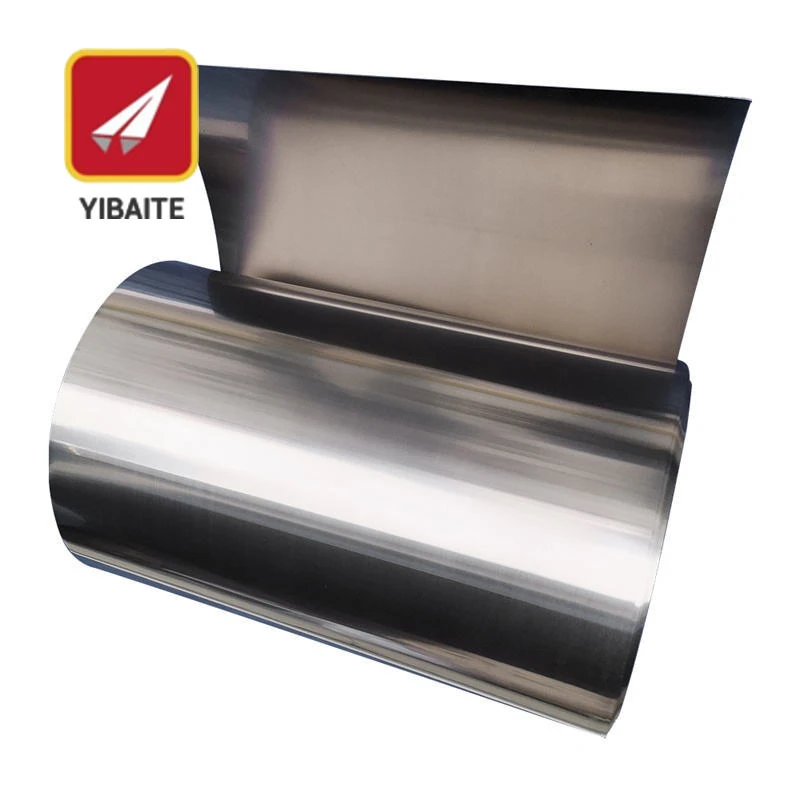
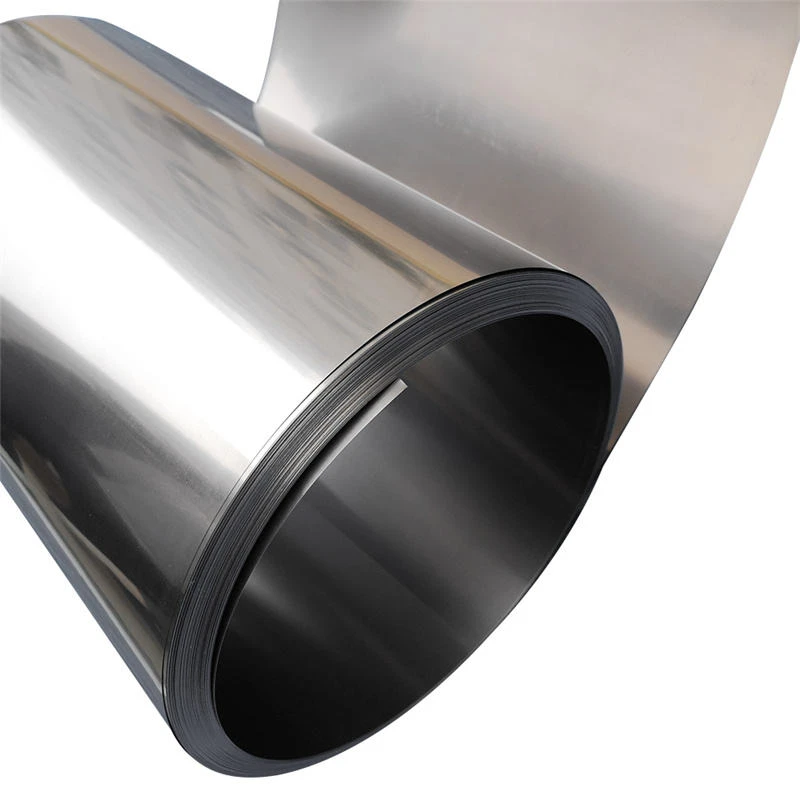
A titanium strip coil may look simple - a roll of silvery metal. But behind it lies a complex, carefully controlled manufacturing process: vacuum melting, forging, hot rolling, acid pickling, multiple cold-rolling and annealing cycles, precision finishing, and rigorous quality verification.
Every step adds cost. Every step also adds value - ensuring that the final strip forms cleanly, welds reliably, and performs predictably in whatever product it becomes.
From titanium sponge in the melting furnace to finished strip coil ready for your production line - the quality chain starts in China's Titanium Valley.
Baoji Yibaite New Materials Technology Co., Ltd. China's Titanium Valley - Your Trusted Titanium Partner.
📧 stevenwei@yibaite.com.cn
📱 WhatsApp: +86 18992799610
🌐 www.ybtti.com