


Most engineering metals fail at low temperatures - they become brittle, crack, and fracture catastrophically. Titanium alloy does the opposite. It gets stronger. And that makes it the indispensable material for LNG systems, rocket propulsion, and polar deep-sea equipment.
The Universal Problem: Low-Temperature Brittleness
Virtually every conventional structural metal has a critical weakness: brittleness at low temperatures.
Carbon steel and alloy steel lose toughness rapidly as temperatures drop. Below the ductile-to-brittle transition temperature, steel shifts from ductile to fully brittle - and fractures suddenly under impact, pressure fluctuation, or load change. History's most devastating equipment failures - cracked storage tanks, ruptured pipelines, collapsed cryogenic structures - share the same root cause: low-temperature brittle fracture in conventional metals.
Titanium alloy is the rare exception. Its crystal structure remains stable at extreme cold - there is no ductile-to-brittle transition. Instead of getting weaker, titanium actually gains strength as temperatures plummet, while retaining full plasticity and toughness.
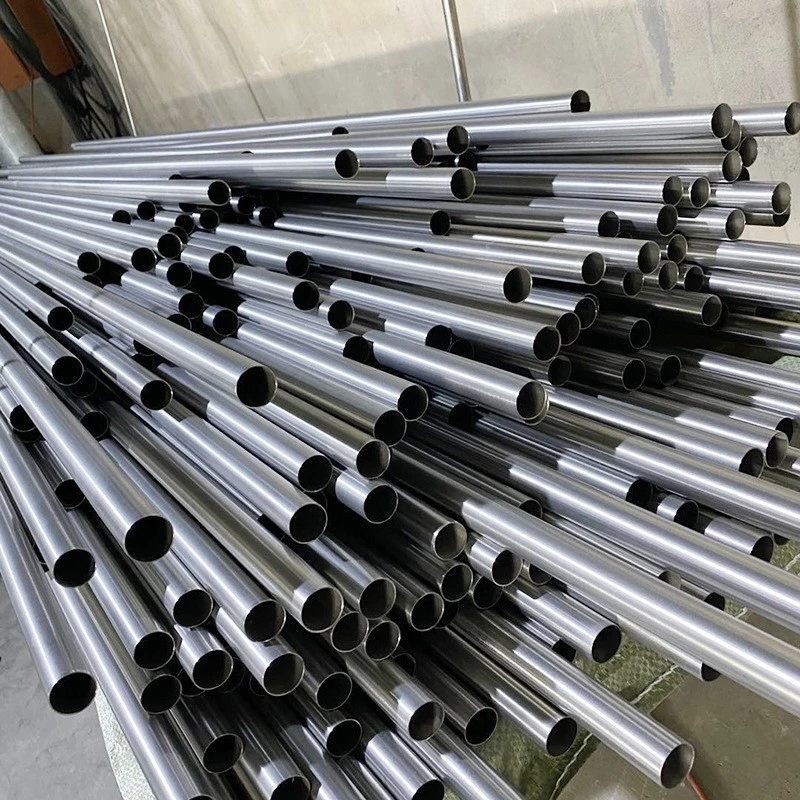
Grade 5 Titanium at -200°C: Stronger Than at Room Temperature
Take Grade 5 (Ti-6Al-4V, UNS R56400) - the most widely used structural titanium alloy. At -200°C, its tensile strength actually exceeds room-temperature values, while maintaining stable plasticity reserves. It continues to withstand cyclic loading and impact pressure without sudden cracking or failure.
| Material | Behavior at Cryogenic Temperature |
|---|---|
| Carbon steel | Rapidly loses toughness - brittle fracture risk |
| Alloy steel | Better, but still subject to ductile-to-brittle transition |
| Aluminum alloy | Becomes brittle at very low temperatures |
| Titanium alloy (Grade 5) | Strength increases - no brittle transition - retains full ductility |
Three Cryogenic Applications Where Titanium Is Irreplaceable
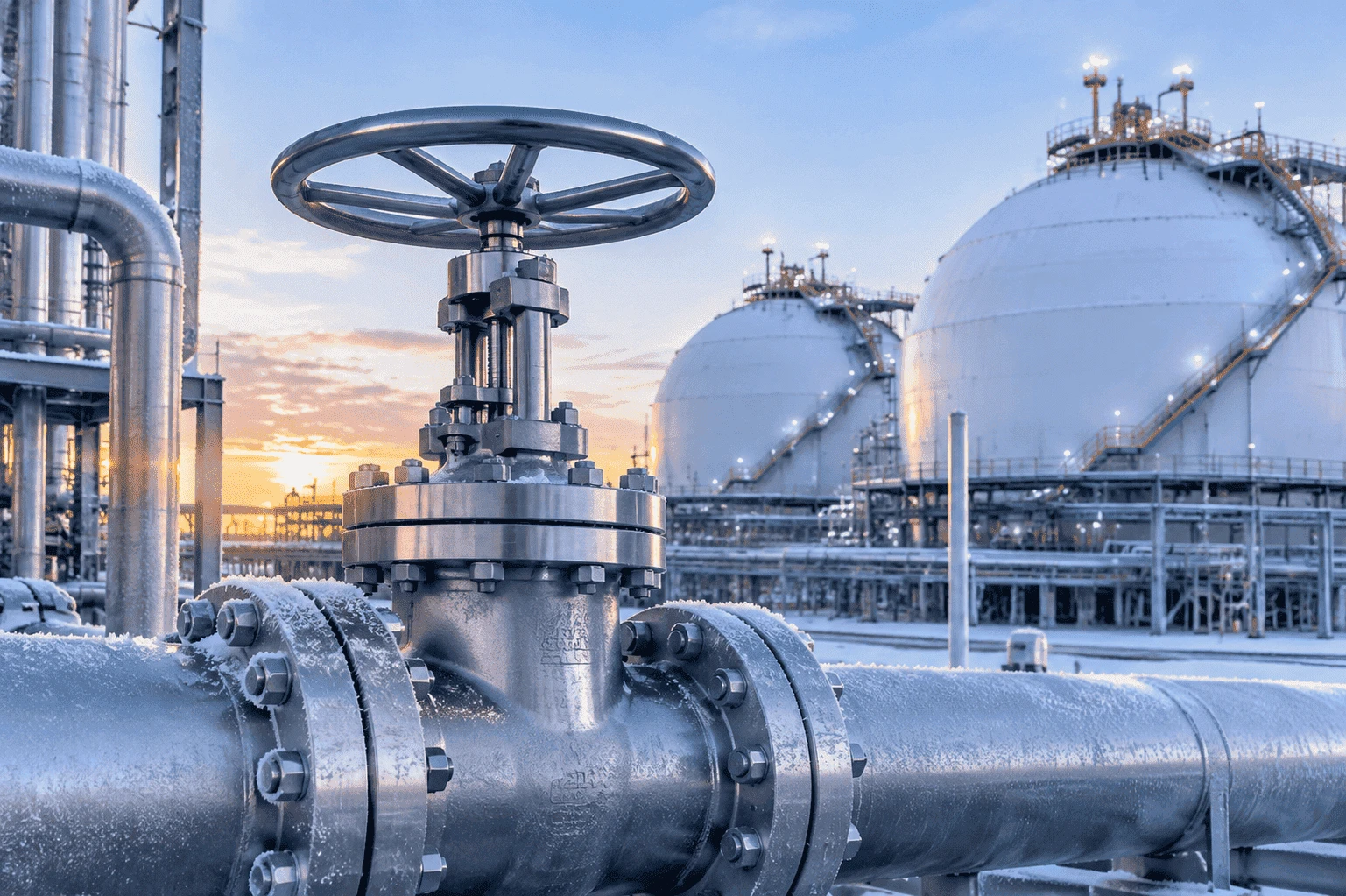
1. LNG clean energy equipment (-162°C)
Liquefied natural gas storage and transport systems operate continuously at -162°C - a temperature that conventional steel simply cannot safely withstand over long service periods.
Titanium alloy is used in cryogenic valves, valve stems, pipeline connections, and storage tank fittings - providing low-temperature toughness, fatigue resistance, and corrosion immunity that keep LNG facilities running safely and reliably.

2. Aerospace propulsion systems (-250°C)
Liquid hydrogen and liquid oxygen tanks, along with propulsion piping, operate at temperatures as low as -250°C - the absolute limit of industrial material capability.
Titanium alloy's exceptional low-temperature mechanical stability makes it the established material for cryogenic propulsion system piping, connection structures, and sealing components in launch vehicles and spacecraft.
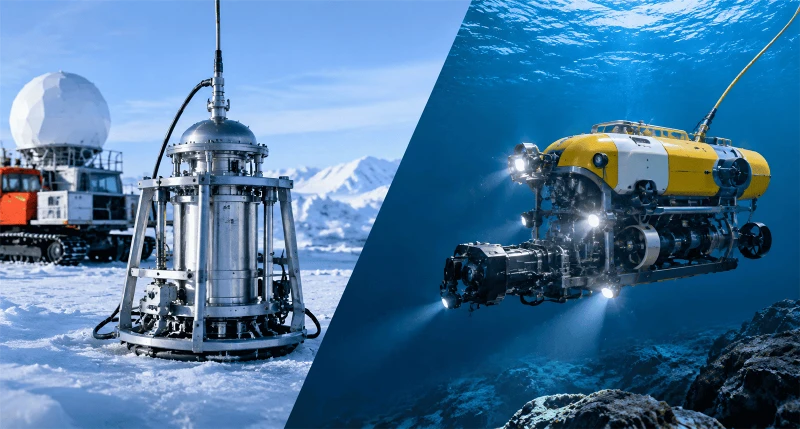
3. Polar and deep-sea cryogenic equipment
Arctic research equipment and deep-sea cold-environment tools face simultaneous low temperature, high pressure, and cyclic loading. Conventional metals become brittle and corrode. Titanium alloy structural components maintain performance and extend service life in these extreme environments.
Material Selection for Cryogenic Service
Cryogenic material selection is fundamentally different from room-temperature engineering. Two priorities:
1. Match the grade to the application
| Grade | Best For |
|---|---|
| Grade 2 (UNS R50400) - commercially pure | Cryogenic corrosion service - low-temperature media exposure where corrosion resistance is paramount |
| Grade 5 (Ti-6Al-4V, UNS R56400) | High-load, high-pressure cryogenic structural components - valves, pressure fittings, load-bearing structures |
Both grades have excellent low-temperature properties - but their optimal applications differ based on stress levels and service media.
2. Strict impurity control - use ELI-grade material
Titanium's low-temperature toughness is highly sensitive to interstitial impurities (oxygen, nitrogen, carbon). For critical cryogenic and aerospace applications, Grade 23 (Ti-6Al-4V ELI, UNS R56401) - extra-low interstitials - is specified to maximize toughness and brittle-fracture resistance at extreme cold.
Every titanium cryogenic component - whether an LNG valve stem, a liquid hydrogen pipeline fitting, or a deep-sea pressure housing - begins as carefully processed titanium raw material.For cryogenic service, material quality is a safety requirement - not a preference. Chemistry consistency, interstitial impurity control, microstructure uniformity, and verified low-temperature mechanical properties are absolute.
Baoji Yibaite New Materials Technology Co., Ltd. is a high-tech titanium processing company in Baoji, Shaanxi Province - China's Titanium Valley. We supply titanium materials for cryogenic, LNG, aerospace, and extreme-environment applications:
|
Product |
Cryogenic Application |
|---|---|
| Titanium plates and sheets | Cryogenic vessel shells, tank structures, structural panels |
| Titanium bars and rods | Machined valves, fittings, pressure components, forging stock |
| Titanium tubes - seamless and welded | Cryogenic piping, LNG transfer lines, propulsion systems |
| Titanium wires | Welding consumables for cryogenic equipment fabrication |
| Titanium strips | Precision-formed components and welded tube feedstock |
All products ship with full mill test certificates - including low-temperature mechanical test data (impact, tensile) upon request - traceable from ingot to delivered product.
Whether you are an LNG equipment manufacturer sourcing cryogenic-grade titanium, an aerospace company specifying material for propulsion systems, a deep-sea equipment producer evaluating titanium for extreme cold service, or a distributor serving the cryogenic materials market - we are ready to discuss your requirements.

The Takeaway
When temperature drops, most metals become liabilities. Titanium alloy becomes an asset - stronger, tougher, and more reliable as the thermometer falls. This unique behavior makes it the only viable structural material for LNG systems at -162°C, rocket propulsion at -250°C, and polar deep-sea equipment at the limits of human engineering.
But cryogenic titanium performance depends entirely on material quality - particularly interstitial impurity control and verified low-temperature test data. That starts with the raw material: Grade 5 and Grade 23 titanium from China's Titanium Valley.
FAQ
Q: Why does titanium get stronger at low temperatures while steel gets brittle?
+
-
A: Titanium has a hexagonal close-packed crystal structure that does not undergo a ductile-to-brittle transition. As temperature drops, its strength actually increases while maintaining ductility. Steel's body-centered cubic structure loses toughness rapidly below its transition temperature.
Q: When should I specify Grade 23 (ELI) instead of standard Grade 5 for cryogenic applications?
+
-
A: Grade 23 (Ti-6Al-4V ELI, UNS R56401) has stricter limits on oxygen, nitrogen, and carbon - maximizing low-temperature toughness. It is the preferred choice for critical aerospace cryogenic structures, liquid hydrogen/liquid oxygen systems, and any application where brittle fracture must be eliminated.
Q: What test data should I require for cryogenic titanium material?
+
-
A: Room-temperature data is not sufficient. Require low-temperature impact testing and low-temperature tensile testing at the actual service temperature. Additionally, verify gas element and interstitial impurity analysis reports to confirm compliance with ELI-grade standards.
Baoji Yibaite New Materials Technology Co., Ltd. China's Titanium Valley - Your Trusted Titanium Partner.
📧 stevenwei@yibaite.com.cn
📱 WhatsApp: +86 18992799610
🌐 www.ybtti.com