Over 250 million elderly people in China alone. Many need walking support. Most refuse to use it. The reason is often not medical - it is design
The Problem: Why Seniors Reject Walking Canes
Walk into any pharmacy and you will find rows of wooden and aluminum canes weighing 500 grams or more. They look institutional. They feel heavy. And for many older adults, carrying one feels like publicly announcing decline.
One father put it simply: "Hold one of those big wooden sticks, and I feel ten years older."
The resistance is not rational - it is emotional. And no amount of medical advice overcomes a product that makes people feel worse about themselves.
Titanium alloy brings three properties that directly address every objection:
| Property | What It Means for a Cane |
|---|---|
| Density: 4.5 g/cm³ | Half the weight of steel - a standard-length cane weighs ~250g, lighter than a smartphone |
| Strength comparable to steel | Fully supports adult body weight without flexing or failure |
| Elastic modulus ~110 GPa | Closer to human bone than stainless steel (~200 GPa) - provides natural cushioning, reducing wrist and elbow impact |
A titanium cane does not feel like a medical device. It feels like a piece of well-made outdoor equipment - and that perception changes everything.

Modern Design: Far Beyond "a Stick"

Today's premium titanium canes incorporate thoughtful engineering at every level:
- Ergonomic handle. Asymmetric shape matching the natural palm contour, wrapped in medical-grade non-slip rubber. Designed specifically to reduce joint pressure for users with hand arthritis.
- Four-point base with pressure-responsive pivoting. Each foot contains a rotating mechanism that automatically adjusts to ground angle. Combined with high-friction rubber and tungsten carbide tips, wet-surface grip improves by 60%+ over single-point designs.
- Tool-free height adjustment. Micro-adjustable within 5 cm - accommodating different shoes, fatigue levels, and terrain without tools.
- Integrated smart features. LED lighting, emergency call buttons, portable seating, and even heart rate monitors - all built into the cane body without adding significant weight or bulk.
Matching the Cane to the User
| User Profile | Recommended Type |
|---|---|
| Mild balance issues | Single-point titanium cane - lightest option, easy daily carry |
| Moderate gait instability (e.g., mild Parkinson's, leg weakness) | Four-point titanium cane - wider base, greater stability |
| Post-surgery recovery | Rehabilitation cane - adjustable forearm support, distributes wrist pressure |
- Height adjustment rule: Stand in normal shoes, arms relaxed at sides. The cane top should align with the wrist crease, with the elbow bent 20–30 degrees. This angle provides effective support without raising the shoulder.
- Which hand? Hold the cane on the opposite side from the weak leg. Walk in a three-beat rhythm: cane → weak leg → strong leg. This counterintuitive pattern maximizes stability and can improve walking efficiency by 30%+ once mastered.
- Maintenance: Check rubber tips monthly. Replace when worn past 50%. Wipe titanium surface with a soft cloth - no harsh chemicals needed. Titanium does not rust, corrode, or degrade.

The Psychological Shift: From Refusal to Acceptance

Getting a senior to accept a cane is often harder than choosing the right one. Strategies that work:
- Reframe the language. Instead of "you need this," try "this lets you walk farther and safer."
- Choose modern aesthetics. Gunmetal grey, matte black, or natural titanium - designs that look like trekking equipment, not hospital supplies.
- Start small. Begin with short use at home, gradually expanding to outdoor settings. Let the user experience the benefit firsthand.
- Normalize through examples. Public figures who use walking aids help reduce stigma.
The goal is simple: make the cane feel like an upgrade, not a concession.
The Material That Makes It Possible
Every titanium cane begins as carefully processed titanium raw material - tubes, bars, or wire drawn to precise specifications.
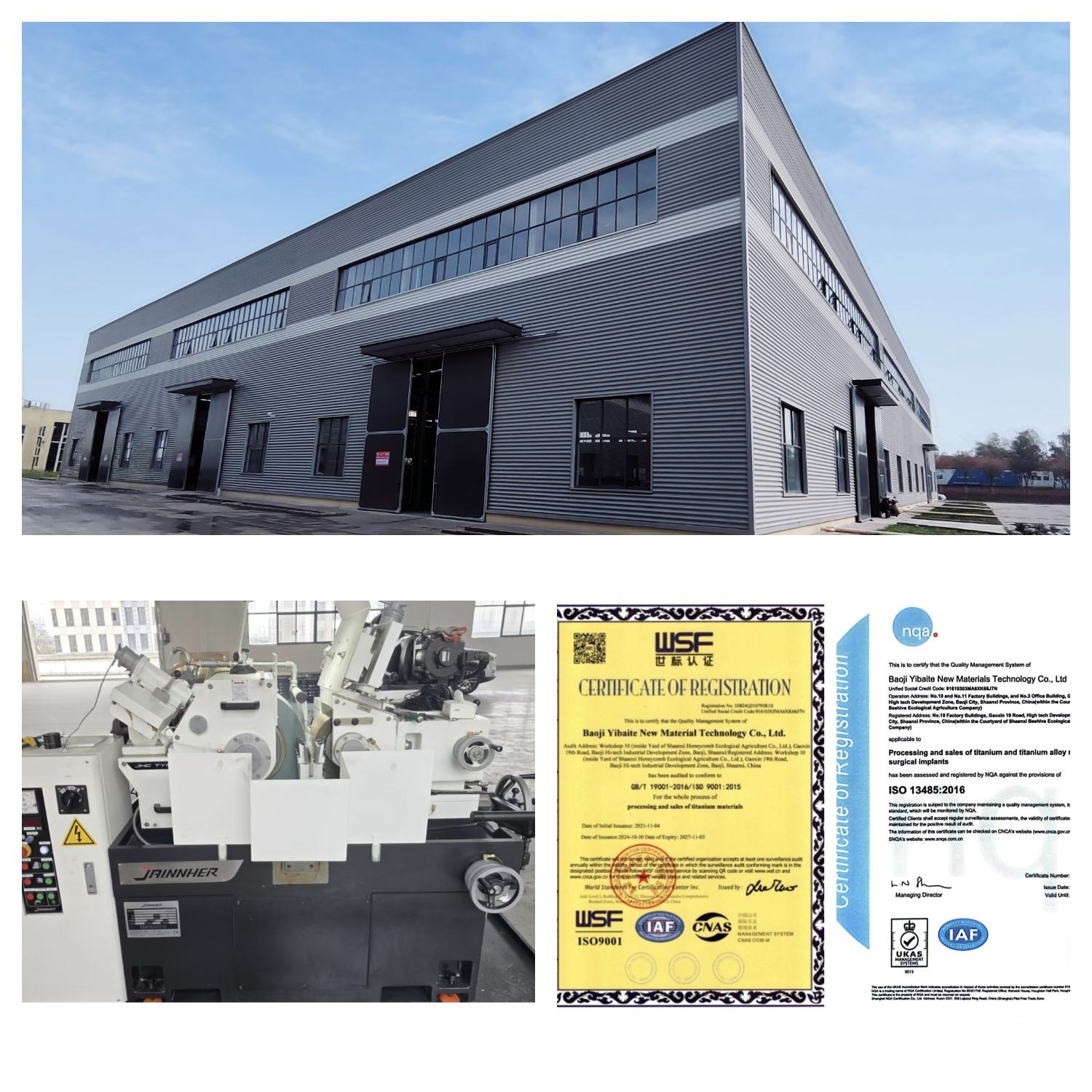
Baoji Yibaite New Materials Technology Co., Ltd. is a high-tech titanium processing company in Baoji, Shaanxi Province - China's Titanium Valley. We supply the titanium materials used in mobility aids, medical devices, consumer products, and industrial applications:
- Titanium tubes - for cane shafts and structural components
- Titanium bars and rods - for machined handles, joints, and fittings
- Titanium plates and sheets - for brackets and hardware
- Titanium wires - for clips, springs, and fine assemblies
Grades: Gr1, Gr2 (preferred for consumer and medical products), Gr5 (Ti-6Al-4V), and custom specifications. Full mill test certificates with every order.
Baoji Yibaite New Materials Technology Co., Ltd. China's Titanium Valley - Your Trusted Titanium Partner.