


As the global energy mix shifts toward cleaner sources, equipment reliability and service life become critical. Titanium alloy - low density, high strength, corrosion-proof, heat-resistant - is already inside the core hardware of nuclear, solar, hydrogen, and ocean energy systems.
Why Energy Engineers Specify Titanium
| Property | Value | Energy Relevance |
|---|---|---|
| Density | ~4.5 g/cm³ (60% of steel) | Lighter components, reduced structural loading |
| Strength | Comparable to many steels | High-pressure and high-load capability |
| Corrosion resistance | Excellent in seawater, acids, alkalis | Long service life in aggressive media |
| Heat resistance | 350–500°C continuous (higher for advanced grades) | Suitable for hot-section energy equipment |
These properties make titanium ideal for energy equipment that must operate reliably for decades in corrosive or high-temperature environments.
Where Titanium Is Used in Energy
1. Nuclear reactor cooling systems
Pressurized water reactor (PWR) plants use titanium heat exchangers and piping to transfer heat and maintain coolant containment. Titanium's corrosion resistance ensures reliable operation under prolonged exposure to high-temperature, high-pressure, and radiation conditions - contributing to overall plant safety and availability.

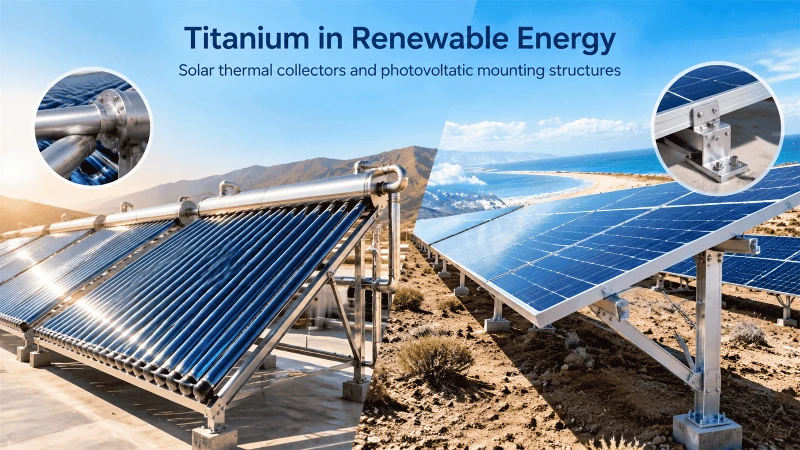
2.Solar thermal collectors and photovoltaic mounting structures
In solar thermal systems, titanium collectors maintain efficient heat transfer under high-temperature, high-humidity conditions for long-term heating and power generation. In photovoltaic (PV) power plants, titanium mounting brackets and frames withstand harsh outdoor environments - deserts, coastal salt zones, alkaline soil - extending plant service life and reducing maintenance costs.
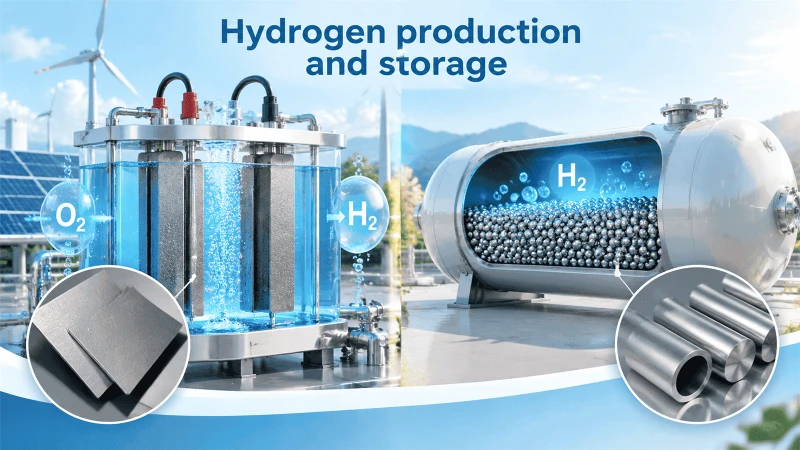
3. Hydrogen production and storage
In water electrolysis for green hydrogen production, titanium electrodes offer stable conductivity and corrosion resistance, reducing electrode degradation and controlling hydrogen production costs. For hydrogen storage, titanium-based alloys (e.g., titanium-iron) can absorb and release hydrogen at moderate pressures - enabling relatively safe storage in lightweight containers.
4. Ocean energy systems
Tidal, wave, and ocean thermal energy conversion (OTEC) equipment is permanently submerged in seawater - one of the most corrosive environments in engineering. Titanium turbine blades, generator housings, and heat exchangers resist seawater attack, dramatically improving equipment reliability and service life. In OTEC systems specifically, titanium heat exchangers transfer heat efficiently under high-temperature, high-pressure, and highly corrosive conditions.

The Material Behind Every Energy Application
Each energy sector uses titanium in specific forms:
| Energy Application | Primary Titanium Products |
|---|---|
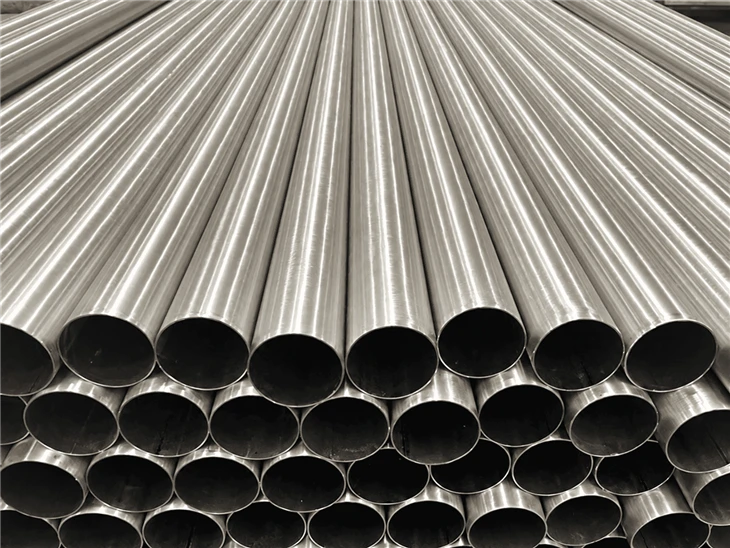
| Nuclear cooling systems | Seamless titanium tube - heat exchanger tube bundles, process piping |
| Solar thermal collectors | Titanium tube and sheet - collector panels, heat transfer surfaces |
| PV mounting structures | Titanium bar and plate - structural frames, brackets, fasteners |
| Hydrogen electrodes | Titanium plate and mesh - electrode substrates, current collectors |
| Hydrogen storage containers | Titanium bar and plate - vessel shells, fittings, pressure components |
| Ocean energy equipment | Titanium tube, plate, and bar - heat exchangers, turbine components, housings |
Every titanium component in an energy system - whether a nuclear heat exchanger tube, a solar collector panel, or a tidal turbine blade - begins as carefully processed titanium raw material. Tube for heat exchangers. Plate for electrode substrates and vessel shells. Bar for machined fittings and structural frames.
The corrosion resistance, thermal stability, and mechanical reliability that energy equipment depends on for decades of service all trace back to the quality of the starting material.
Baoji Yibaite New Materials Technology Co., Ltd. is a high-tech titanium processing company in Baoji, Shaanxi Province - China's Titanium Valley. We supply titanium materials used across the energy sector - nuclear, solar, hydrogen, and ocean energy:
| Product | Energy Application |
|---|---|
| Titanium tubes - seamless and welded | Heat exchangers, process piping, cooling systems, collector panels |
| Titanium plates and sheets | Electrode substrates, vessel shells, structural panels, mounting frames |
| Titanium bars and rods | Machined fittings, flanges, brackets, fasteners, turbine components |
| Titanium wires | Welding consumables for equipment fabrication and repair |
| Titanium strips | Precision-formed components for collectors, heat exchangers, and structural use |
All products ship with full mill test certificates - chemistry, mechanical properties, dimensions - traceable from ingot to delivered product.
Whether you are a nuclear equipment manufacturer specifying heat exchanger tube bundles, a solar energy company evaluating titanium for collectors and PV mounting, a hydrogen technology developer sourcing electrode material, or a distributor serving the clean energy sector - we are ready to discuss your titanium material requirements.

The Takeaway
The energy transition demands equipment that lasts longer, resists corrosion, and performs reliably under extreme conditions. Titanium alloy meets these requirements across nuclear, solar, hydrogen, and ocean energy - and its role will only expand as clean energy infrastructure scales globally.
From nuclear cooling tubes to hydrogen electrode plates to tidal turbine components - the material starts with reliable, specification-compliant titanium from China's Titanium Valley.