


Under the trend of modern architecture moving towards environmental friendliness, durability and aesthetics, titanium materials, with their outstanding performance and technical advantages, have become the core new material driving the innovation of the construction industry, and have comprehensively reshaped the development ecosystem of the construction industry.


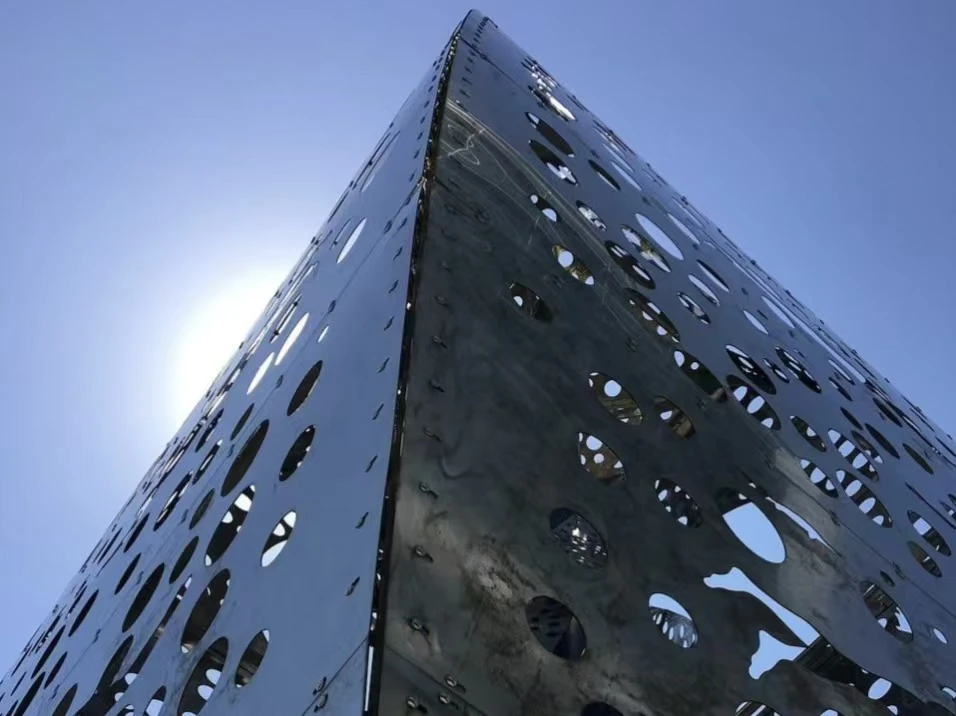
Core performance advantages: Durable and lightweight, cost reduction and quality improvement
Titanium material has unparalleled corrosion resistance. Its surface can form a dense oxide film, which can resist erosion from acid rain, salt fog, industrial pollution, etc. Its service life can last for several decades, significantly reducing the maintenance costs of buildings in the later stage. At the same time, titanium has a density of only 60% of that of steel, and its strength is higher. The lightweight characteristic can be adapted to large-span and unconventional creative architectural designs, ensuring the safety of the building while effectively reducing the amount of building materials and optimizing the building space structure.
Precision manufacturing barriers: High-purity process, controllable appearance level
The production of titanium building materials falls under the category of precision manufacturing that involves multiple disciplines. It requires extremely high purity of raw materials, reaching over 99.9%, and relies on advanced processes such as vacuum melting and isothermal forging, along with an intelligent temperature control system, to ensure uniform material structure and stable performance. Additionally, through surface treatment technologies such as anodizing and micro-arc oxidation, titanium materials can present a variety of long-lasting colors, combining both decorative and durability features, and meeting the requirements of various artistic architectural designs.
Multifaceted application scenarios: Internal and external penetration, global adaptability
Steel building materials have achieved full-scale application in the construction industry. In terms of building exteriors, they can be used for curtain walls, roofs, canopies, etc. With self-cleaning properties, heat insulation capabilities, and strong plasticity, they can be fit for complex shapes such as arcs and hyperbolic surfaces, shortening construction periods and reducing operation and maintenance costs. In interior spaces, titanium materials are used for titanium alloy doors and windows, handrails, and furniture. They have features such as sealing and sound insulation, antibacterial properties, and superior texture, and are widely used in special places such as high-end residences, medical facilities, and laboratories.
Industry Future Trends: Green and Low-Carbon, Intelligent Empowerment
Under the backdrop of the dual carbon policy, the characteristics of titanium materials, such as 100% recyclability and low recycling energy consumption, align with the concept of building a circular economy development. They continue to contribute to the reduction of carbon emissions and carbon footprint in the construction industry. At the same time, intelligence has become the core development direction of steel building materials. Intelligent steel building materials equipped with sensors and Internet of Things technologies can achieve functions such as building structure safety monitoring, intelligent temperature control, and light and shadow adjustment, effectively enhancing the safety and living comfort of buildings.
In conclusion, titanium materials are driven by technological innovation as the core force. They meet the development needs of modern architecture for environmental protection, intelligence, and high quality. In the future, with the upgrading of materials science and manufacturing processes, they will be applied in more construction fields, continuously enabling the upgrading of living environments and the innovation of the construction industry.