


An advanced fighter jet contains 20–25% titanium by structural weight. A second-generation interceptor? Just 2%. The trend is clear: the more advanced the aircraft, the more titanium it needs. Here is why - and what it means for the titanium supply chain.
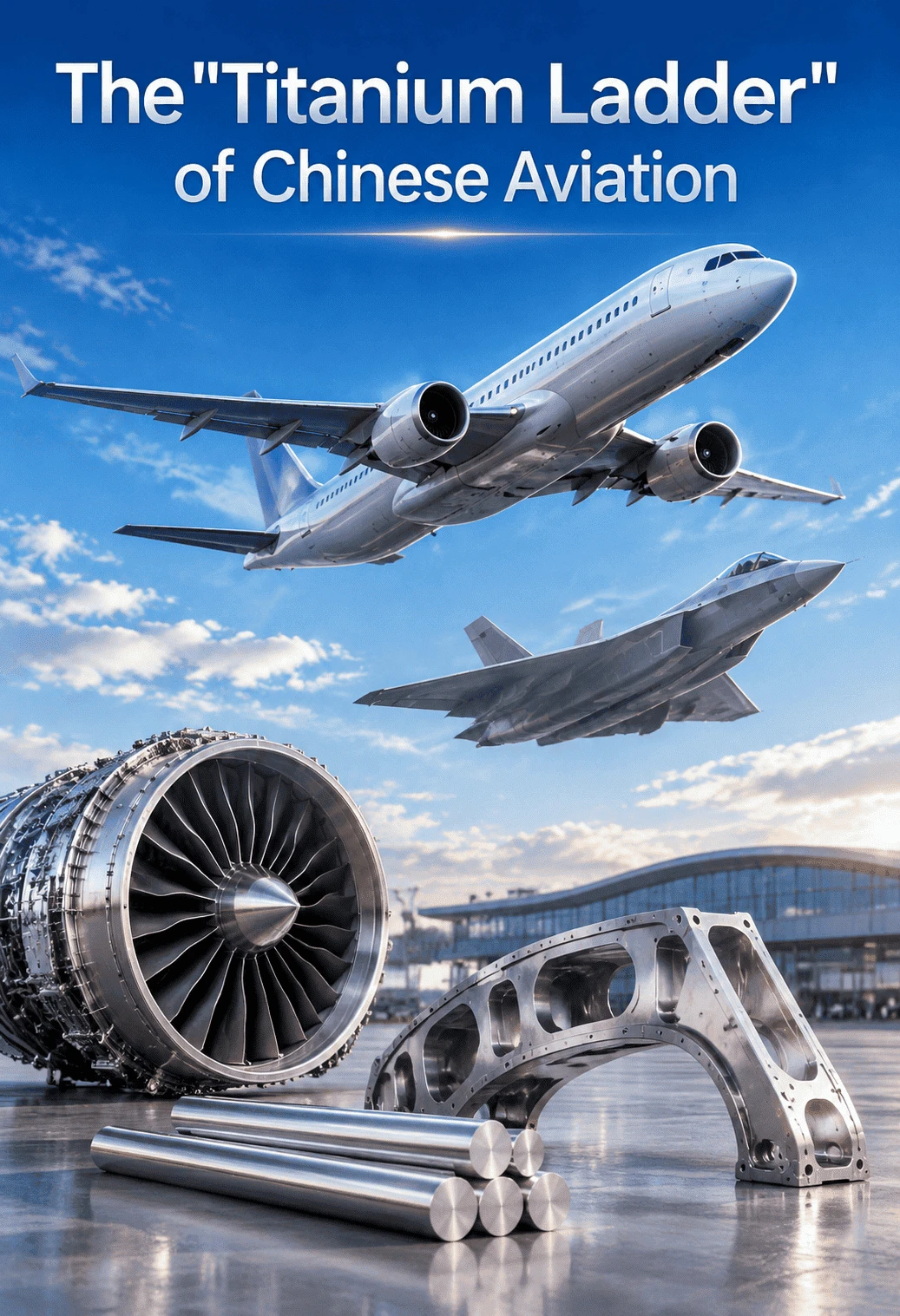
The "Titanium Ladder" of Chinese Aviation
Chinese aerospace academician Cao Chunxiao presented a revealing set of data showing titanium content across generations of Chinese fighter aircraft:
| Aircraft Generation | Titanium Content | Context |
|---|---|---|
| J-8 (2nd gen) | 2% | ~93 kg of titanium parts per aircraft |
| J-10 (3rd gen, domestic design) | 4% | Doubled from previous generation |
| J-11 (heavy fighter) | 15% | Major structural titanium application |
| J-20 (5th gen stealth) | 20% | Large-scale titanium forgings and structures |
| J-35 (5th gen) | 25% | Highest domestic fighter titanium content |
For transport aircraft: the Y-20 "Kunpeng" uses approximately 10% titanium - comparable to the American C-17 (10.3%). The American F-22 holds the fighter record at 41% titanium - the global benchmark still being pursued.
On the commercial side: the ARJ21 regional jet uses 4.8% titanium, while the C919 narrowbody reaches 8–9% - comparable to the Boeing 777 and Airbus A380.
Why Titanium Content Rises with Aircraft Capability
The progression from 2% to 25% is not arbitrary. Four structural forces drive increasing titanium adoption:
1. Specific strength
Titanium provides equivalent load-bearing capacity at roughly half the weight of steel. Every kilogram saved on a fighter airframe or transport structural member translates to greater maneuverability, higher payload, or extended range.
2. Heat resistance
Faster aircraft generate higher surface and engine bay temperatures. Aluminum alloys lose strength above ~150°C. Titanium maintains structural integrity well into the 300–500°C range - making it essential for supersonic structures and engine-adjacent components.
3. Large integral forgings
Modern aircraft increasingly replace multi-piece bolted and welded assemblies with single-piece titanium forgings - reducing part count, eliminating fatigue-prone joints, and cutting weight simultaneously. Advances in large-scale forging press capability have directly enabled the titanium content jump seen in newer platforms.
4. Carbon fiber compatibility
New-generation aircraft use extensive carbon fiber reinforced polymer (CFRP) structures. Titanium is one of the few metals compatible with CFRP - galvanic corrosion between aluminum and carbon fiber is a serious problem, while titanium and CFRP coexist safely. More composites mean more titanium fasteners, fittings, and connection hardware.

Commercial Aviation: The ARJ21 and C919 Story
The ARJ21 - a 70–90 seat regional jet with 1,200–3,700 km range - completed its first flight in November 2008 and received type certification in December 2014. First commercial delivery went to Chengdu Airlines in November 2015, and its first passenger revenue flight operated in June 2016.
The nearly eight-year journey from first flight to passenger service reflects the rigorous certification testing every commercial jet must pass - cold weather, hot/humid conditions, natural icing, crosswind, flutter, and dozens of other trials.
The C919 - China's first large narrowbody commercial aircraft - has reached 8–9% titanium content, driven by engine components, structural brackets, landing gear elements, and CFRP-compatible fasteners.
The Historical Foundation: Y-10
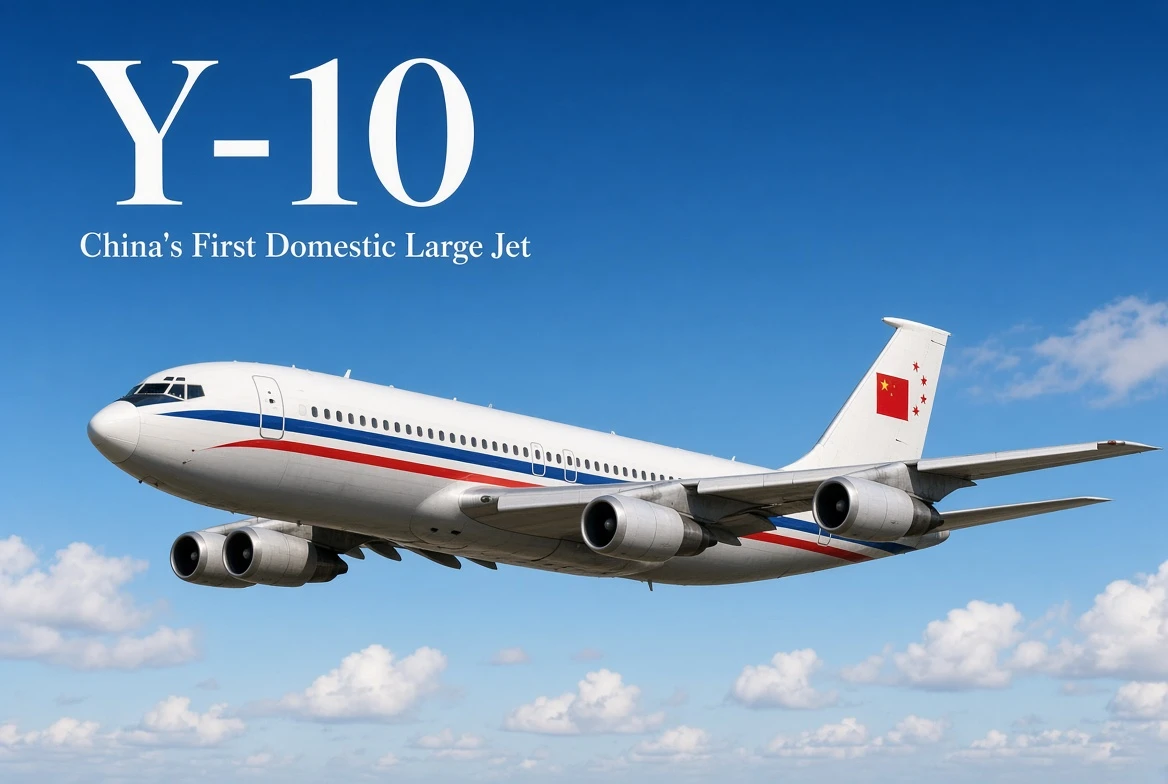
China's first domestically designed large jet aircraft - the Y-10 - first flew in September 1980. With a maximum takeoff weight of 110 tons and a practical range of 8,300 km, it completed seven flights to Lhasa. Though it never entered commercial service, the Y-10 established the design and manufacturing foundation that later programs built upon.
From Aircraft Programs to Titanium Supply Chain
Every aircraft platform - from a regional jet to a fifth-generation fighter - consumes titanium in specific forms:
| Aircraft Application | Primary Titanium Product | Typical Grade |
|---|---|---|
| Airframe structural forgings (bulkheads, frames, spars) | Titanium bar/billet - forged and machined | Grade 5 (Ti-6Al-4V, UNS R56400) |
| Engine components (compressor discs, blades, casings) | Titanium bar - forged | Grade 5 / near-alpha heat-resistant alloys |
| Fasteners and rivets | Titanium wire - cold-headed | Grade 5 (Ti-6Al-4V) |
| Hydraulic and fuel lines | Titanium tube - seamless | Grade 9 (Ti-3Al-2.5V, UNS R56320) |
| Skin panels and formed structures | Titanium sheet - formed and machined | Grade 5 |
| CFRP-compatible fittings | Titanium bar and plate - machined | Grade 5 / Grade 23 |
| Welded structural assemblies | Titanium wire and plate | Grade 5 |
Baoji Yibaite New Materials Technology Co., Ltd. is a high-tech titanium processing company in Baoji, Shaanxi Province - China's Titanium Valley - the largest titanium production hub in the world. We supply titanium materials used in aerospace, aviation, and high-performance manufacturing:
| Product | Aerospace Application |
|---|---|
| Titanium bars and rods | Forging stock for structural components, machined fittings, fastener production |
| Titanium plates and sheets | Skin panels, structural panels, formed components |
| Titanium wires | Fasteners, rivets, welding consumables |
| Titanium tubes | Hydraulic lines, fuel lines, environmental control systems |
| Titanium strips | Precision-formed components |
All products ship with full mill test certificates - chemistry, mechanical properties, dimensions - traceable from ingot to delivered product.
Whether you are an aerospace manufacturer sourcing forging stock, an aircraft structural producer requiring titanium plate and bar, a fastener company evaluating titanium wire, or a distributor serving the aviation materials market - we are ready to discuss your requirements.

The Takeaway
Chinese aircraft titanium content has risen from 2% to 25% over the past half-century - a progression driven by the unrelenting demands of modern aviation: lighter weight, higher temperature capability, large integral structures, and carbon fiber compatibility.
Every point of that increase required advances in titanium material science - better alloys, larger forgings, more consistent raw material. The aircraft programs drove the technology, but the supply chain made it possible.
From Baoji - China's Titanium Valley - to the airframe of every aircraft that flies.
FAQ
Q: Why do advanced fighter jets use so much more titanium than older aircraft?
+
-
A: Titanium provides high specific strength (light weight at high strength), heat resistance up to 500°C+, and compatibility with carbon fiber composites. As aircraft designs demand higher performance, larger integral forgings, and more composite structures, titanium content naturally increases.
Q: Which titanium grade is most widely used in aircraft structures?
+
-
A: Grade 5 (Ti-6Al-4V, UNS R56400) is the dominant aerospace structural alloy - used in airframe forgings, engine components, fasteners, and structural fittings. Grade 23 (Ti-6Al-4V ELI) is specified where maximum toughness is required.
Q: How does titanium content in Chinese commercial aircraft compare to Western programs?
+
-
A: The C919's 8–9% titanium content is comparable to the Boeing 777 and Airbus A380. Fighter programs have progressed from 2% (second generation) to 25% (fifth generation), narrowing the gap with global benchmarks like the F-22's 41%.
Baoji Yibaite New Materials Technology Co., Ltd. China's Titanium Valley - Your Trusted Titanium Partner.
📧 stevenwei@yibaite.com.cn
📱 WhatsApp: +86 18992799610
🌐 www.ybtti.com