Volkswagen just equipped a 500-unit limited-edition Golf R with a factory Akrapovič titanium exhaust system. The reasons go deeper than weight savings or a better exhaust note.
What Volkswagen Did
The Golf R Black Edition II - a Japan-exclusive, 500-unit limited run priced at ¥7,149,000 - comes standard with an Akrapovič titanium alloy exhaust system. This is not an aftermarket option. It is a factory-integrated component, calibrated to the car's engine management, emissions targets, and torque curve.
For a production vehicle (even a limited one), this is a significant material decision.
Why Titanium for an Exhaust System
Weight reduction
Titanium's density is approximately 4.5 g/cm³ - roughly 40% lighter than stainless steel (~7.9 g/cm³). The Akrapovič system uses thinner titanium walls while maintaining structural integrity, reducing exhaust system weight meaningfully. This lowers overall vehicle mass and improves front-rear weight distribution - directly benefiting handling response.
Heat management
Titanium's thermal conductivity is approximately half that of stainless steel. This means exhaust heat is retained within the pipe rather than radiating into the underbody. The benefit: hotter exhaust gas maintains higher velocity, improving scavenging efficiency and supporting the engine's power output.
Corrosion resistance
An exhaust system endures one of the harshest environments on a vehicle - extreme heat followed by condensation cooling, salt spray in winter, and continuous thermal cycling. Titanium's self-forming oxide layer makes it essentially immune to this attack. Where stainless steel eventually rusts at weld points and joints, titanium does not.
Acoustic character
This is the enthusiast's favorite detail. Titanium's lower elastic modulus changes how the pipe wall vibrates compared to stainless steel. The result is a distinctly different exhaust note:
- Higher-rpm tones are cleaner and crisper
- Deceleration pops and burbles are more defined
- The sound character comes from thin-wall resonance of the material itself - not from artificial drone or loudness
The quad-tip system is not designed to be louder. It is designed to sound different - sharper, more metallic, more precise.
The Production Reality: Why This Is Rare
Titanium exhaust systems cost approximately 5–8× more than stainless steel equivalents in raw material alone, plus significantly more in fabrication (tig welding in inert atmosphere, specialized forming, etc.).
This is why titanium exhausts remain confined to:
- Limited-edition performance models
- Supercars and hypercars
- Aftermarket premium upgrades
Volkswagen's decision to make it a factory-standard component on the Golf R Black Edition II is notable because it means:
- Back-pressure and torque curves are factory-calibrated - no aftermarket tuning uncertainty
- Emissions compliance is guaranteed - no risk of failing inspection from non-standard exhaust modifications
- Noise regulations are met - a common problem with aftermarket titanium systems
For the buyer, this eliminates the compliance and calibration risks that come with aftermarket titanium exhaust upgrades.


The Full Package: More Than Just an Exhaust
The titanium Akrapovič system pairs with the Golf R's 333 hp 2.0T engine and 4MOTION all-wheel-drive system to deliver a complete performance package. The titanium exhaust is not an isolated luxury - it is an integrated component of a vehicle engineered for driving engagement.
| Component | Contribution |
|---|---|
| Titanium exhaust | Weight reduction + acoustic character + corrosion immunity |
| 2.0T turbocharged engine | 333 hp - the power source |
| 4MOTION AWD | Putting power to the ground |
| Limited production (500 units) | Exclusivity and collector value |
What This Means for the Titanium Industry
Every titanium automotive exhaust system - from a Golf R Akrapovič to a Porsche GT3 aftermarket system - requires titanium tube, sheet, and welding wire. The automotive titanium exhaust market remains small compared to aerospace, but it is growing as:
- Emissions regulations tighten (titanium enables lighter, more efficient exhaust aftertreatment packaging)
- Performance brands seek material differentiation
- Electric vehicle platforms reduce engine-related weight - making every remaining kilogram on the chassis more significant

Every titanium exhaust component - headers, downpipes, mid-pipes, muffler bodies, tips - begins as carefully processed titanium raw material. Tube for piping. Sheet for formed muffler housings. Wire for welding consumables.
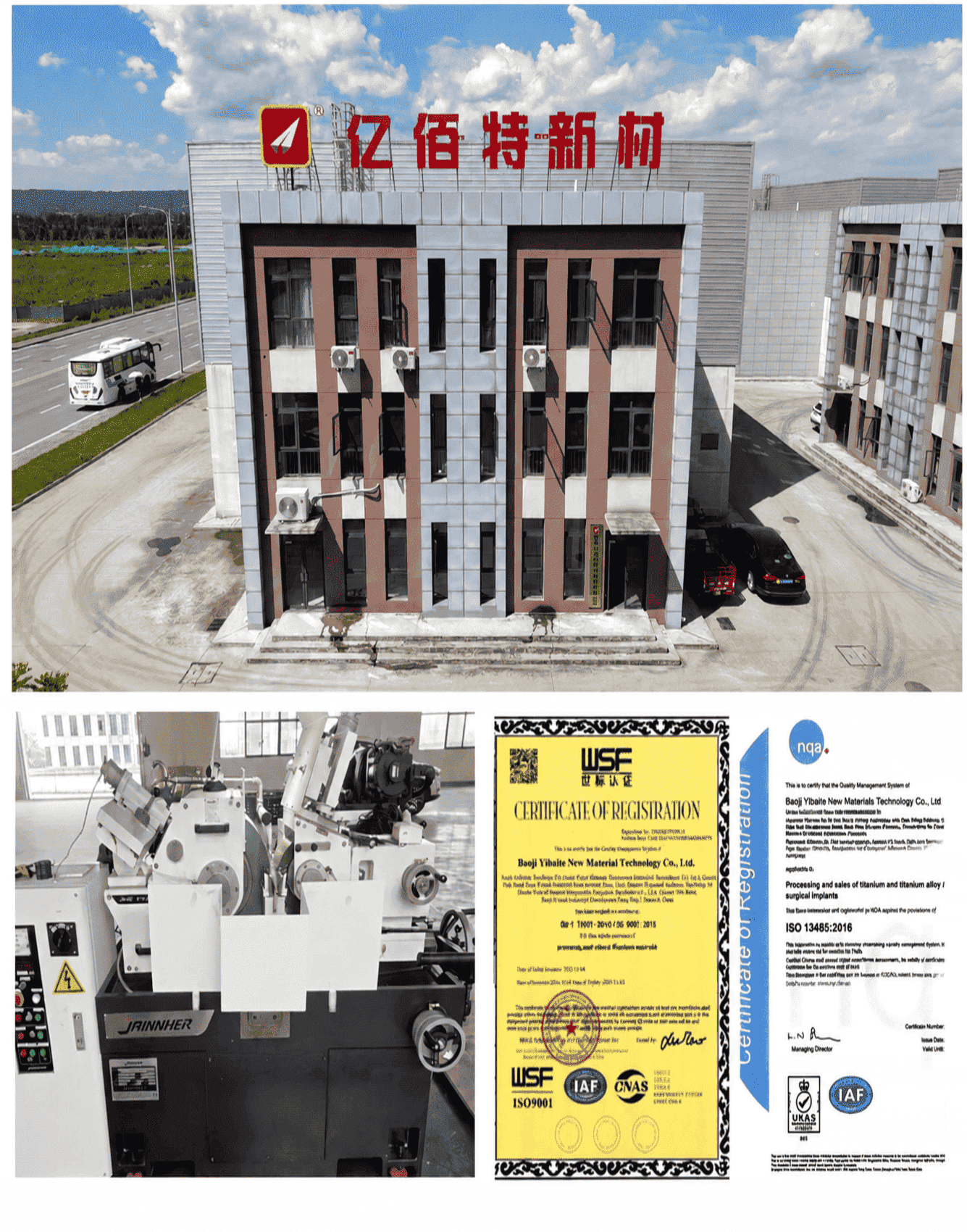
Baoji Yibaite New Materials Technology Co., Ltd. is a high-tech titanium processing company in Baoji, Shaanxi Province - China's Titanium Valley. We supply titanium materials used in automotive, motorsport, aerospace, and industrial applications:
| Product | Automotive Application |
|---|---|
| Titanium tubes - seamless and welded | Exhaust piping, downpipes, headers |
| Titanium plates and sheets | Muffler housings, heat shields, formed components |
| Titanium wires | TIG welding consumables for exhaust fabrication |
| Titanium bars and rods | Machined flanges, brackets, hangers |
| Titanium strips | Precision-formed clamps, reinforcement bands |
Grades available:
- Grade 1, Grade 2 - for exhaust systems prioritizing corrosion resistance and formability
- Grade 5 (Ti-6Al-4V) - for high-strength structural components
- Grade 9 (Ti-3Al-2.5V) - for thin-wall tubular exhaust components - excellent weldability
- Custom specifications upon request
All products ship with full mill test certificates - chemistry, mechanical properties, dimensions - traceable from ingot to delivered product.
Whether you are an exhaust system manufacturer, a motorsport parts producer, an aftermarket performance brand, or a distributor serving the automotive titanium market - we are ready to discuss your requirements.