


Titanium is no longer reserved for jet engines and surgical implants. It is increasingly showing up in the cars we drive - and the reasons are exactly the same.
The Cars Already Using Titanium

Ford Kuga - The "Titanium" Edition
Ford offers a Titanium trim level on the Kuga (Escape) crossover, positioned alongside ST-Line and Active variants. While the "Titanium" name references a premium equipment package rather than the metal itself, it reflects how strongly the word titanium is now associated with advanced engineering and premium quality in the automotive market.
Porsche - Where Titanium Is Real Metal
Porsche uses actual titanium alloy across multiple platforms and aftermarket applications:
| Model / Application | Titanium Component | Benefit |
|---|---|---|
| Porsche 911 | Aftermarket titanium exhaust system | 8.4 kg weight reduction at the rear - improved heat management |
| Porsche Cayenne 3.0T | TINOX titanium mid-rear exhaust | 30% lighter than OEM steel - better durability and corrosion resistance |
| Porsche 992 Carrera | Titanium turbo heat shield | Reduces turbo heat transfer to surrounding components |
| Supercars (various) | 3D-printed titanium brake calipers | Extreme weight reduction with uncompromising braking performanc |

Why Automakers Choose Titanium
The automotive industry uses titanium for the same reasons aerospace and medical do - the properties are simply too good to ignore:
Lightweight without sacrificing strength
Titanium's density (4.5 g/cm³) is roughly 56% that of steel, while its strength is comparable. In an engine, this means:
- Connecting rods and valves with lower reciprocating mass → faster engine response, higher achievable RPM, improved fuel efficiency
- Exhaust systems that shed significant weight at the rear of the vehicle → better weight distribution and handling
01
Heat resistance
Titanium maintains structural integrity at temperatures where steel begins to degrade. This makes it ideal for:
- Exhaust manifolds and downpipes
- Turbo heat shields
- Brake components operating under extreme thermal cycling
02
Corrosion resistance
Titanium's self-forming oxide layer means:
- Exhaust systems that never rust - even in wet, salty conditions
- Wheel components and exterior trim that maintain appearance for the life of the vehicle
- No coating or treatment required - the protection is inherent
03
Aesthetic quality
Titanium's natural luster and the ability to anodize it into vibrant colors make it desirable for visible components - wheel center caps, exhaust tips, badging, and interior trim accents.
04

The Trend: From Race Cars to Road Cars
Titanium in automobiles is following the same trajectory it followed in watches, cookware, and bicycles:
| Phase | Status |
|---|---|
| Motorsport and supercars | Established - titanium connecting rods, valves, exhausts, and now 3D-printed calipers |
| Premium sports cars | Growing - Porsche, BMW M, and aftermarket performance brands |
| Mainstream automotive | Beginning - "Titanium" editions, titanium-coated components, and select structural applications |
As manufacturing costs decline and 3D printing matures, titanium's presence in everyday vehicles will continue to expand.
Every titanium automotive part - whether an exhaust system, a valve, a brake caliper, or a turbo heat shield - begins as carefully processed titanium material. The quality of the starting material determines whether the finished component delivers the weight savings, heat resistance, and durability that engineers designed for.
Baoji Yibaite New Materials Technology Co., Ltd. is a high-tech titanium processing company in Baoji, Shaanxi Province - China's Titanium Valley. We supply titanium materials used in automotive, motorsport, and high-performance vehicle applications:
| Product | Automotive Application |
|---|---|
| Titanium bars and rods | Machined engine valves, connecting rods, fasteners, brake caliper blanks |
| Titanium plates and sheets | Exhaust system components, heat shields, structural brackets |
| Titanium tubes | Exhaust piping, fluid handling, turbo plumbing |
| Titanium wires | Springs, clips, welding consumables |
| Forgings and high-precision products | Engine components, suspension parts, drivetrain hardware |
Grades available:
- Gr1, Gr2 (commercially pure titanium) - for exhaust systems and corrosion-critical applications
- Gr5 / TC4 (Ti-6Al-4V) - for high-strength engine and drivetrain components
- TA18 - for tubular and formed exhaust components
- Custom specifications upon request
All products ship with full mill test certificates and can be produced to your required dimensions, tolerances, and mechanical properties.
Whether you are a performance parts manufacturer, an automotive OEM exploring titanium applications, or a distributor serving the motorsport aftermarket - we are ready to support your supply chain.
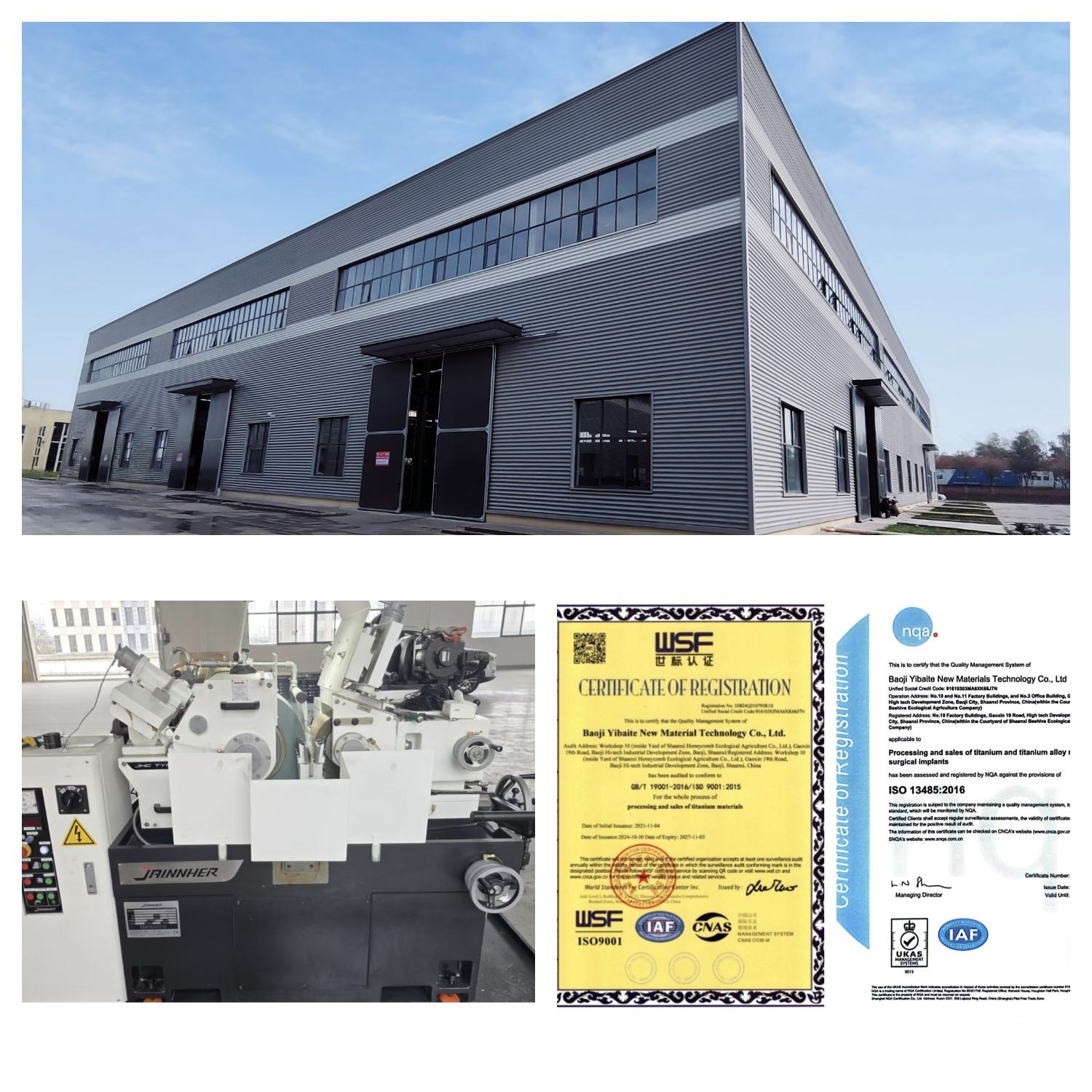
Baoji Yibaite New Materials Technology Co., Ltd. China's Titanium Valley - Your Trusted Titanium Partner.