


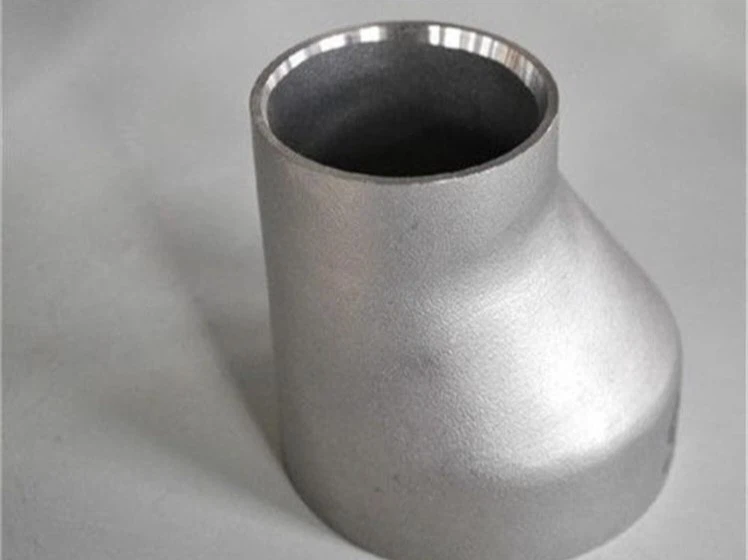
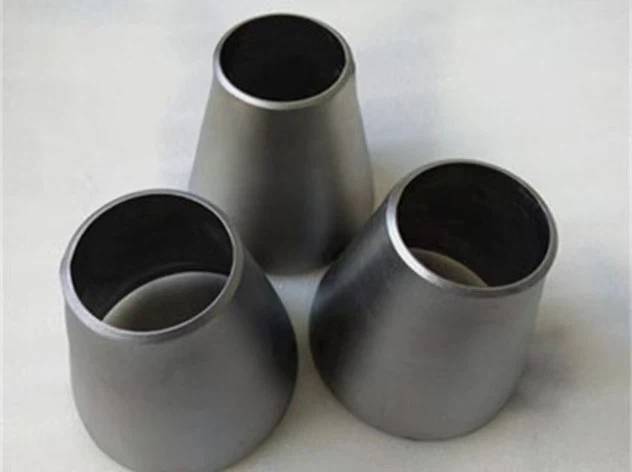
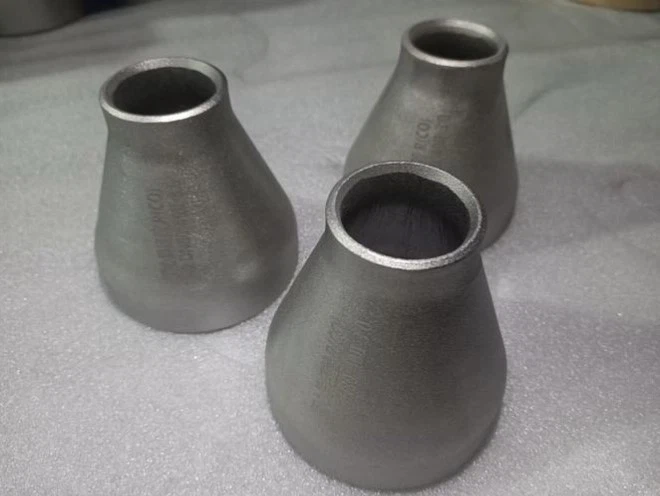
In the chemical pipeline system, reducers are used to connect pipes of different diameters, serving as a crucial component for achieving medium flow direction switching, pressure regulation, and flow control. However, in the face of harsh conditions such as strong corrosion, high temperatures, and high pressures, traditional stainless steel reducers often fail to meet the requirements. Titanium reducers, with their outstanding corrosion resistance, lightweight structure, and long-term economic benefits, have become the preferred solution in the high-end chemical industry.
Outstanding Tolerance in Extreme Corrosive Environments
The most outstanding advantage of titanium divergent tubes lies in their strong tolerance to extreme corrosive media. In boiling hydrochloric acid, nitric acid, and chlorine-based alkali media, their corrosion rate can be controlled below 0.018mm/year, and their corrosion resistance is more than 15 times that of stainless steel. They are particularly suitable for transporting strong corrosive media such as sulfuric acid and hydrochloric acid.
This excellence stems from the self-generated dense oxide film on the titanium surface. This oxide film has self-repairing capabilities. Even in harsh environments containing chloride ions, it can exhibit extremely strong resistance to pitting corrosion, effectively avoiding the risk of local perforation and leakage.
It should be noted that when titanium divergent tubes are used in dry chlorine gas environments, the moisture content of the medium must be maintained at ≥0.5%, otherwise, a combustion risk may occur; while in wet chlorine environments, titanium is completely stable and reliable. Additionally, the corrosion rate of titanium in organic acids and high-temperature alkaline solutions is controllable, but it should avoid long-term contact with strong reducing acids (such as concentrated sulfuric acid).
The synergistic advantages of structural performance and lightweight design
The titanium anisotropic pipe fully considers the actual force characteristics of chemical pipelines in its structural design. The conical transition zone, which is the core area of pressure boosting erosion, is usually thickened by 20%-30% to enhance the resistance to medium impact and ensure the reliability of long-term operation.
At the same time, the density of titanium is only 4.51g/cm³, approximately 57% of that of steel. This lightweight feature can significantly reduce the load requirements of pipeline supports, lower installation costs, and is particularly suitable for large-span or high-altitude pipe gallery layouts.
In terms of temperature adaptability, the titanium anisotropic pipe can withstand working conditions of ≤300℃ for a long time, and the short-term operating temperature can reach 600℃, meeting the variable diameter connection requirements of most chemical thermal process sections.
Longevity and Full-Cycle Economic Performance
From a life-cycle perspective, titanium divergent pipes offer significant economic advantages. In the same corrosive environment, their service life can be more than 10 times that of stainless steel pipe fittings, significantly reducing the frequency of replacements and production losses due to corrosion failure.
Titanium divergent pipes do not require anti-corrosion coatings and naturally possess the ability to resist medium penetration, thereby reducing daily cleaning and maintenance costs. More importantly, the products are typically 100% inspected by eddy current testing or radiographic testing, effectively avoiding the risk of sudden leaks and enhancing the operational reliability of the entire pipeline system.
Key points for selection and installation
To fully utilize the advantages of titanium divergent pipes, the following principles should be followed during selection and installation:
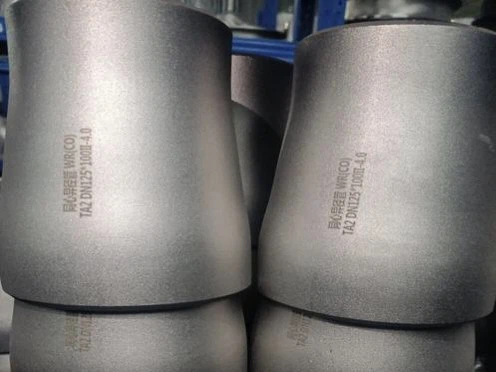
In terms of material matching, for conventional media, TA2 (Gr2) can be preferred (with the highest cost performance); for media containing hydrochloric acid or reducing acids, TA10 (Gr12) with molybdenum-nickel alloy should be used to ensure corrosion resistance.
In terms of structural design, when using eccentric divergent pipes in horizontal pipelines, the eccentricity must be marked to prevent gas accumulation. During welding, the same brand of titanium material (such as TA2 paired with TA2 pipe) must be used to avoid electrochemical corrosion at the interface of different materials.
Surface treatment is a mandatory requirement. Acid washing (HF/HNO₃) or electrolytic polishing must be carried out to ensure the integrity of the passivation film, especially to enhance the corrosion resistance of the weld area.
Typical chemical application scenarios
Titanium divergent tubes have been successfully applied in multiple chemical fields:
· Chlor-alkali industry: Used for diameter changes from the electrolysis cell to the concentration tower, capable of withstanding dual corrosion from wet chlorine and alkaline solutions.
· Nitric acid plant: In the high-temperature (≤200℃) section of the concentration process, the corrosion rate of TA2 material divergent tubes is less than 0.1mm/year.
· Seawater desalination: Used for diameter changes at the inlet and outlet of high-pressure pumps, resisting chloride ion corrosion and seawater erosion.
Design warning: For highly abrasive media, it is recommended to increase the wall thickness of the cone and control the flow velocity within ≤3m/s to extend the service life.
The titanium divergent pipe, with its unique corrosion-resistant mechanism, lightweight structure and long-term economic benefits, demonstrates irreplaceable advantages in the chemical pipeline system. Reasonable selection of models, standardized installation and maintenance will maximize its engineering value and provide a solid guarantee for the safe, stable and efficient operation of chemical production.