


The SR-71 Blackbird - the fastest, most untouchable aircraft ever built - was made from materials purchased from the very nation it was designed to spy on.
The Problem: Speed Kills Airplanes
In 1960, a Soviet missile shot down an American U-2 spy plane over Soviet territory. The era of impunity at 70,000 feet was over.
The US needed something faster. Requirements: sustained cruise above Mach 3 (1,020 m/s), operational altitude above 24,000 meters.
But physics presented a brutal obstacle. At Mach 3, air friction heats the aircraft surface to over 500°C, with local peaks exceeding 600°C.
Aluminum fails above 150°C. It would soften and disintegrate before the aircraft reached its target speed.
The engineers at Lockheed's Skunk Works needed a material that could survive where aluminum could not. They found their answer in a metal that had been dismissed as "an industrial orphan" - titanium alloy.

Why Titanium Was the Only Option
| Property | What It Delivered at Mach 3 |
|---|---|
| High-temperature strength retention | Maintained 80%+ of room-temperature strength at 500°C+ |
| Low thermal expansion | Minimal distortion during extreme temperature swings |
| High specific strength | 57% the density of steel with comparable strength - enabling extreme weight reduction |
| Corrosion resistance | No degradation from fuel, atmosphere, or operational environment |
The decision was made: build the entire aircraft from titanium alloy.

The Dark Comedy: Buying Titanium from the Enemy
There was one problem. America did not have enough titanium.
The world's largest titanium producer in the 1960s was the Soviet Union.
The CIA and Pentagon launched a covert operation: purchasing hundreds of tons of Soviet sponge titanium through a network of shell companies in third countries. The material traveled through intermediaries, obscuring its origin, before arriving at Lockheed's facilities in California.
The irony was exquisite: the aircraft designed to spy on the Soviets was built from Soviet metal.

The Result: 93% Titanium, Zero Kills
The completed SR-71 Blackbird was a titanium sculpture flying at the edge of space:
| Achievement | Detail |
|---|---|
| Speed record | 3,529.56 km/h (1976) - still the fastest manned jet aircraft ever |
| Survivability | Over 1,000 missile engagements in its career - never once shot down |
| Countermeasure | Simply accelerate away from any incoming missile |
| Titanium content | 93% of total structural weight |
A famous engineering detail: titanium expands significantly when heated. The SR-71's fuel tanks were designed with deliberate gaps that only sealed once the airframe heated up at Mach 3+. The aircraft literally leaked fuel on the ground - it had to refuel immediately after takeoff.

The Legacy: From Military Secret to Everyday Material
The SR-71 retired in 1998. But the titanium technologies developed for it transformed the world:
| Era | Titanium's Role |
|---|---|
| 1960s | Strategic military material - scarce, expensive, classified |
| 1980s–2000s | Aerospace standard - jet engines, airframes, space vehicles |
| Today | Commercial aviation (Boeing 787: 15% titanium by weight), medical implants, deep-sea vehicles, consumer electronics, sports equipment |
The Skunk Works' proprietary titanium forming and welding techniques gradually entered the civilian domain, driving down costs and expanding applications.
What was once worth its weight in gold as a classified strategic resource is now found in bicycle frames, eyeglasses, smartphone bodies, and kitchen cookware.

From the SR-71 to Your Supply Chain: The Same Material, Scaled for Indus
The titanium alloy in the SR-71's airframe shares the same fundamental properties - high strength-to-weight ratio, heat resistance, corrosion immunity, fatigue life - as the titanium materials used in chemical plants, power stations, marine systems, medical devices, and industrial equipment today.
The difference is application. The material science is the same.
And it all starts with one thing: quality titanium raw material - melted, processed, tested, and delivered to specification.

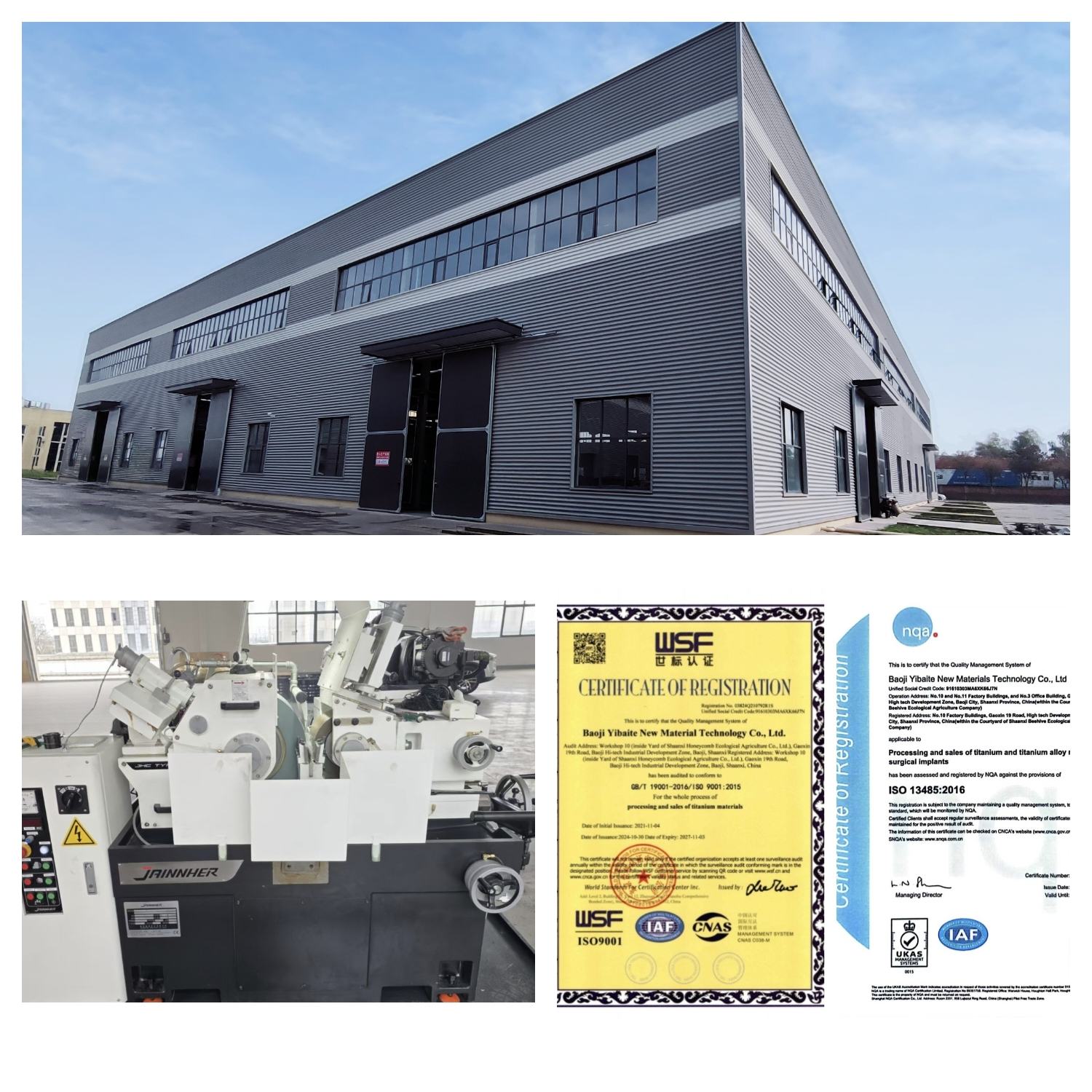
We Are Baoji Yibaite New Materials Technology Co., Ltd.
Located in Baoji, Shaanxi Province - China's Titanium Valley, we are a high-tech titanium processing company supplying manufacturers and distributors worldwide.
What we supply:
- Titanium plates and sheets - for structural, industrial, and formed components
- Titanium bars and rods - for machining, forging, and precision parts
- Titanium wires - for welding, springs, and specialty applications
- Titanium tubes - for heat exchangers, piping, and marine systems
- Titanium strips - for precision-formed components
- Forgings and high-precision products - for aerospace, energy, and demanding industrial use
Grades:
Gr1, Gr2, Gr5 (Ti-6Al-4V), TC4, TA11, TA15, TC21, and custom specifications.
All products ship with full mill test certificates - from ingot to finished product.
The Takeaway
The SR-71 Blackbird was born from an impossible requirement, an overlooked material, and a geopolitical irony that still astonishes today. Its legacy is not just a speed record or an undefeated combat record - it is the proof that titanium alloy can perform at the absolute extremes of human engineering.
That same material - in different forms, for different applications - is what we produce every day.
From China's Titanium Valley to the world.
Baoji Yibaite New Materials Technology Co., Ltd. China's Titanium Valley - Your Trusted Titanium Partner.