


For a long time in the past, the mainstream approach in the explosive ordnance disposal robot industry was to enhance the shock resistance of the robots by using thicker steel plates. However, this strategy led to a vicious cycle where "the heavier the robot, the more difficult it was to adapt to complex scenarios": wheeled robots weighing over 300 kilograms had difficulty turning in narrow corridors and debris-filled areas, and many sites that should have been reached immediately were prevented from being accessed due to their own weight.
The widespread use of titanium alloy core load-bearing structures is completely rewriting this long-standing industry logic.
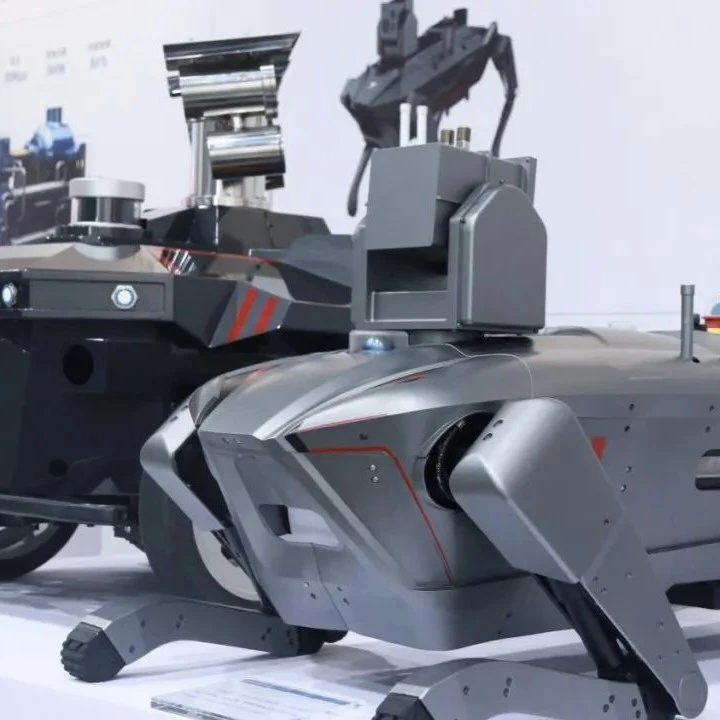
From "Stack Thickness" to "Adjust Structure": A Fundamental Reversal of the Material Logic
To withstand explosive impacts, the conventional steel skeleton industry for anti-explosion robots typically uses steel plates over 10mm thick that are welded together to form the framework. The overall weight of the machine often exceeds 300 kilograms. The load pressure on the crawler walking system is extremely high. In typical operation scenarios such as 40-degree slopes and 300-millimeter-high obstacles, there are frequent issues of insufficient power, jamming, and slipping. More critically, the heavy steel skeleton significantly raises the center of gravity of the entire machine, making it prone to tipping over when crossing ditches or climbing stairs, introducing new risks to high-risk operations.
The intervention of titanium alloys directly breaks this paradox of "strength and weight cannot be achieved simultaneously". Domestic titanium material processing enterprises have launched titanium alloy structural components specifically for anti-explosion robots, using the TC4 (GR5) titanium alloy integrated forging process. Under the same impact resistance indicators, the core load-bearing components are reduced by more than 45% compared to the traditional steel-based solutions. The actual measurement data from the factory shows that the medium-sized anti-explosion robots with titanium alloy main frames can control the overall weight to be within 160 kilograms, improving the maneuverability by 30%, and being able to easily pass ordinary civilian elevators. In narrow scenarios such as high-rise buildings and subway tunnels, the operation radius has directly doubled.
The "un-deformed bottom line" under the impact of explosion: Invisible structural safety
The core mission of explosion-proof robots is to preserve the integrity of internal electronic components under extreme impacts. Once the framework deforms under the action of the shock wave, it will squeeze the internal controllers, sensors, and communication modules. Even if not directly hit by the explosion fragments, the entire robot will lose functionality immediately - not only unable to complete the task, but also potentially causing the unexpelled explosive materials to enter an out-of-control state.
The titanium alloy framework here demonstrates advantages that traditional steel cannot match. The actual measurement data from leading domestic explosion-proof robot manufacturers show that the titanium alloy load-bearing framework with topological optimization design, after a close-range explosion impact with 1kg TNT equivalent, the deformation of the framework is controlled within 0.2mm, and all the CCD cameras and multi-degree-of-freedom mechanical hand control units installed inside are intact. The robot can even continue to perform the remaining disposal tasks after the explosion - not only completing the task, but also preventing the unexpelled explosive materials from getting out of control.
This "withstand the impact without sagging" characteristic essentially stems from the high specific strength property of titanium alloy - at the same weight, the load-bearing capacity of TC4 titanium alloy is more than 1.5 times that of ordinary structural steel. Its tensile strength exceeds 900MPa, and it also has excellent dynamic impact toughness, which does not break in a brittle manner like ordinary steel under a sudden strong impact.
After multiple impacts and vibrations of traditional steel frameworks, the welding positions are prone to develop micro-cracks, which are difficult to be detected with the naked eye during daily maintenance and often suddenly fracture at critical moments. However, the titanium alloy framework uses a process of overall forging and local friction stir welding, and the weld strength is close to the base material itself - this means that the most prone-to-problem welding parts have become the most solid link in the entire structural chain. After millions of vibration fatigue tests, the welds still do not show visible cracks, and the service life without faults of the entire machine is extended by two times.
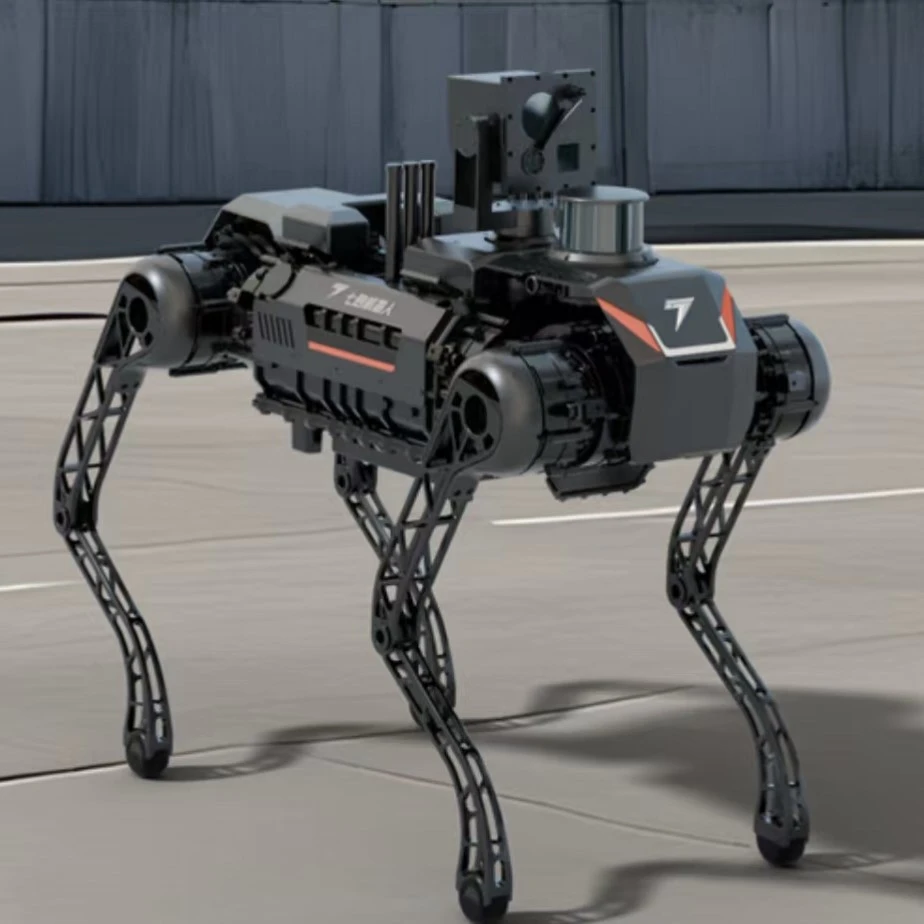
Domestic manufacturers have already incorporated ultra-low gap Ti-6Al-4V ELI titanium alloy into the manufacturing of explosion-proof robot frames, further enhancing the material toughness of the system in low-temperature and high-impact scenarios, ensuring that the equipment maintains stable impact resistance during outdoor operations in high-latitude cold regions in winter.
From the passive defense of "thickening the steel plates" to the active safety of "reconstructing the frame with titanium alloy", the material upgrade of explosion-proof robots ultimately points to the same thing: making the safety distance for frontline high-risk workers an unyielding defense line.