


"Aerospace-grade titanium" is no longer just a marketing phrase on watch spec sheets. It is a genuine engineering upgrade - and it is becoming the standard for every flagship wearable on the market.

The Weight Difference You Can Feel
Titanium's density is 4.5 g/cm³ - roughly 57% that of stainless steel (7.93 g/cm³). In practical terms, a titanium watch case weighs 40%+ less than an equivalent stainless steel case.
| Stainless Steel Watch | Titanium Watch | |
|---|---|---|
| Typical weight (no strap) | 52g+ | ~44.8g (Amazfit Balance Ultra) |
| On-wrist feel | Noticeable "pressure" | "Almost imperceptible" |
A few grams may sound trivial. On the wrist, worn continuously for 12–16 hours daily, it is the difference between "aware of the watch" and "forgetting it is there."
Stronger Than It Looks
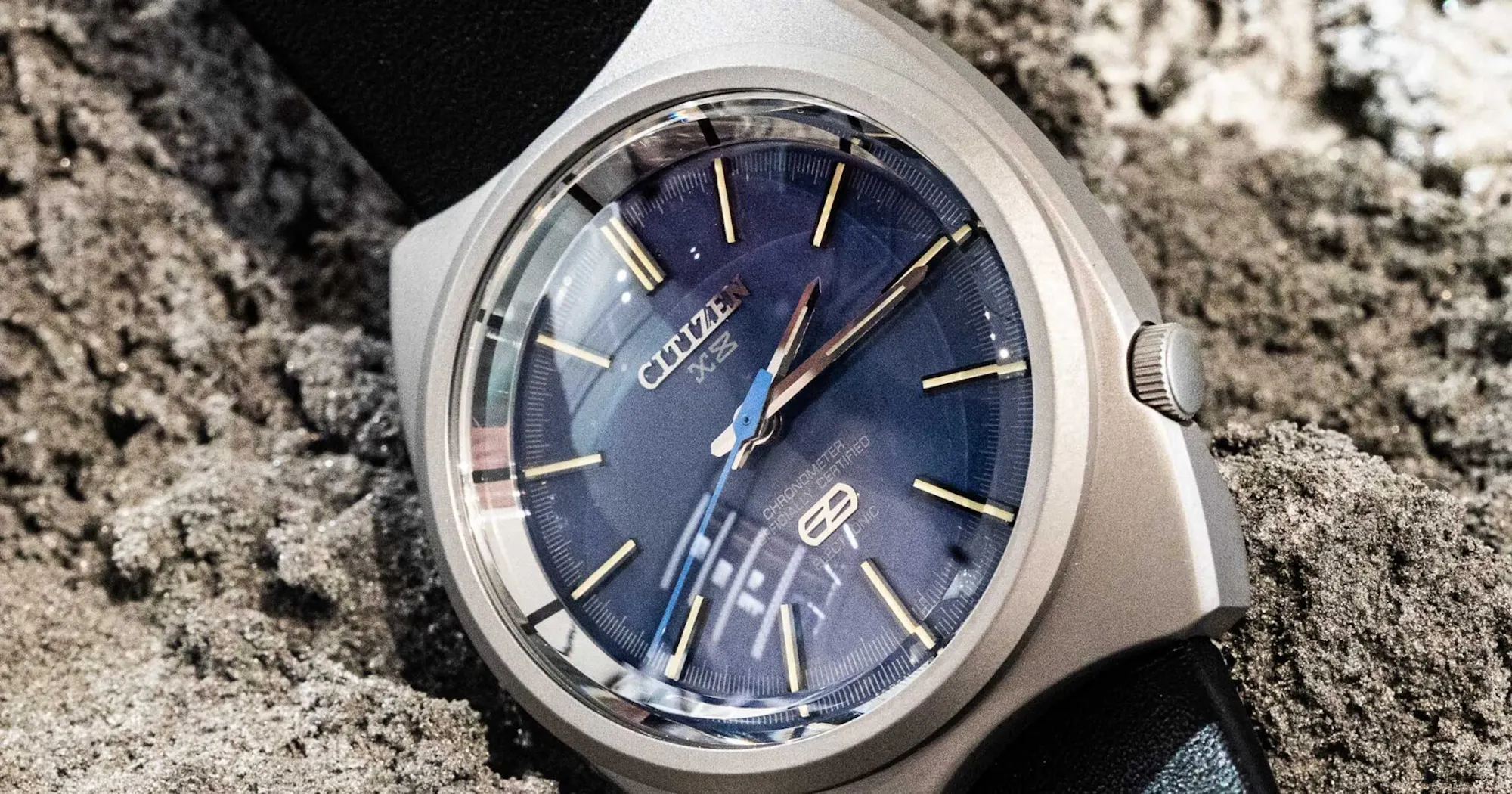
Light does not mean weak. Grade 5 titanium (Ti-6Al-4V) - the standard for premium watch cases - delivers:
- Tensile strength of 900+ MPa
- Hardness approximately 5× greater than ordinary steel at equivalent weight
- Combined with sapphire crystal (Mohs 9), the result is a watch face that resists scratches from keys, desk edges, and daily contact

Skin-Safe and Corrosion-Proof
Titanium spontaneously forms a TiO₂ oxide film on its surface that provides:
- Total corrosion resistance - no reaction with sweat, saltwater, or humidity. No discoloration, no oxidation, no blackening
- Nickel-free composition - titanium contains zero nickel, making it the preferred material for metal-sensitive skin
- Biocompatibility - the same reason titanium is used for artificial joints and dental implants: the human body accepts it without rejection or irritation
For anyone who has experienced green staining, itching, or rashes from stainless steel or nickel-containing watch bands, titanium eliminates the problem entirely.
From CNC Machining to 3D Printing: A Manufacturing Revolution
Traditional CNC machining of titanium is notoriously difficult. Titanium's low thermal conductivity (Grade 5: ~7.96 W/m·K - far below aluminum) causes extreme tool wear, and material utilization rates are only 30–40%.
Metal 3D printing (additive manufacturing) has fundamentally changed the equation:
| Metric | CNC Machining | 3D Printing |
|---|---|---|
| Material utilization | 30–40% | ~95% - approximately 50% savings |
| Design freedom | Limited by tool access | Virtually unlimited - complex geometries, internal structures |
| Scalability | Labor-intensive | Automated, repeatable |
Apple's Watch Ultra 3 and Series 11 titanium editions are now produced entirely using 100% recycled titanium powder through 3D printing - a milestone for both manufacturing and sustainability.
The trade-off: 3D-printed surfaces require post-processing (CNC finishing, bead blasting, or polishing) to meet consumer-grade surface quality expectations. But the manufacturing economics and design possibilities are transformative.

The Market Has Already Decided
Titanium is rapidly becoming the default material for premium wearables:
| Brand | Product | Titanium Application |
|---|---|---|
| Apple | Watch Ultra 3, Series 11 | Full titanium case - 3D-printed from recycled titanium powder |
| Huawei | Watch 4 Pro | Titanium alloy bezel |
| Honor | Watch 5 Ultra | Aerospace-grade Grade 5 titanium |
| Samsung | Galaxy Watch Ultra | Grade 4 titanium metal frame |
| Amazfit | Balance Ultra | Grade 5 titanium case - 44.8g total |
Market data confirms the trend:
- High-end smartphone titanium adoption rate projected to exceed 15% in 2025
- Smart wearable titanium consumption growing at 40% annually
- Titanium 3D printing in consumer electronics: projected market potential exceeding RMB 10 billion
From Aerospace to Your Wrist: The Same Material, Different Mission
The Grade 5 titanium in a smartwatch case is the same alloy that holds together jet engines, deep-sea submersibles, and surgical implants. The material did not change - the manufacturing scale and application context did.
This "descent" from aerospace to consumer electronics is not a dilution of the material's capability. It is a demonstration that when a material is truly excellent, the market will find ways to bring it to everyone.
We Supply the Titanium Behind the Technology
Baoji Yibaite New Materials Technology Co., Ltd. is a high-tech titanium processing company in Baoji, Shaanxi Province - China's Titanium Valley. We supply titanium materials used in consumer electronics, watches, aerospace, medical devices, and industrial manufacturing:
| Product | Consumer Electronics Application |
|---|---|
| Titanium plates and sheets | Stamped and formed watch cases, phone mid-frames, laptop housings |
| Titanium bars and rods | CNC-machined crowns, buttons, hinges, and hardware |
| Titanium wires | Clips, springs, antenna brackets, structural elements |
| Titanium strips | Precision-formed bezels, bracelet links, decorative components |
Grades available:
- Grade 1, Grade 2 (commercially pure) - for applications prioritizing biocompatibility and optimal surface finish
- Grade 4 - higher strength CP titanium - used in Samsung Galaxy Watch Ultra
- Grade 5 (Ti-6Al-4V) - the premium standard for watches and consumer electronics - used by Apple, Honor, Amazfit
- Custom specifications upon request
All products ship with full mill test certificates - because the material behind a premium product must be verifiably premium.
