


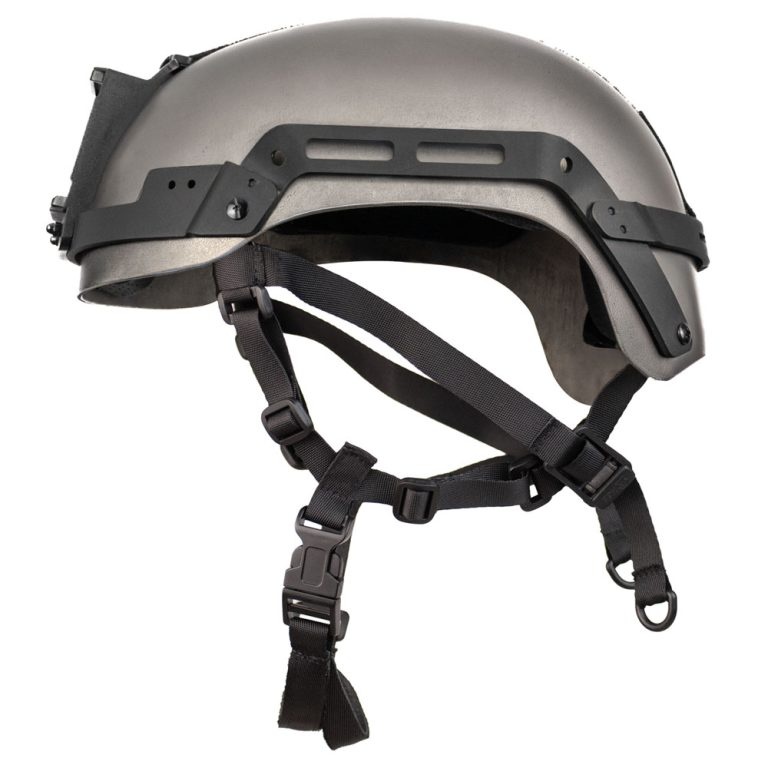
A helmet protects the soldier's head. But a heavy helmet exhausts the soldier's neck. Titanium solves the second problem without compromising the first.
The Weight Problem Nobody Talks About
A standard steel combat helmet weighs approximately 1.5 kg. On a mannequin in a showroom, it feels manageable. On a soldier's head during a 10-hour patrol, it becomes a grinding burden.
The neck muscles fatigue. Head-turning slows. Aiming becomes fractionally less precise. In combat, those fractions compound into real danger - delayed threat recognition, slower reaction time, reduced alertness during extended operations.
The protection is essential. The weight penalty is the hidden cost of that protection.
The Titanium Solution: Same Safety, 30% Less Weight
Titanium alloy's defining combination - 56% the density of steel with comparable strength - translates directly into a meaningful helmet weight reduction.
Using Grade 6 titanium alloy (Ti-5Al-2.5Sn), helmet weight drops by approximately 30% compared to standard steel:
| Steel Helmet | Titanium Helmet | |
|---|---|---|
| Weight | ~1.5 kg | ~1.05 kg |
| Weight reduction | - | ~0.45 kg |
| Ballistic protection | Standard | Equivalent at same protection level |
Half a kilogram on the head does not sound dramatic. But worn continuously through movement, terrain changes, and hours of vigilance, the effect is transformative:
- Neck fatigue significantly reduced
- Head rotation faster and more fluid - quicker scanning of surroundings
- Sustained alertness over longer periods
- Improved aiming speed and precision
The soldier does not just carry less weight - they perform better throughout the mission.
Beyond Weight: The Hidden Advantages
Titanium delivers additional benefits that steel cannot match in helmet service:
Corrosion immunity
Battlefield environments are unforgiving: tropical rainforest, island humidity, salt-spray coastal zones. Steel helmets corrode over time - particularly at contact points between the shell and interior liner, where trapped moisture degrades structural integrity.
Titanium does not rust. Ever. No maintenance required. No structural degradation from environmental exposure. Longer service life with zero corrosion-related failures.
Non-magnetic properties
Titanium is inherently non-magnetic. In specialized operations where reducing magnetic signature matters - mine detection zones, electronic warfare environments, covert reconnaissance - titanium helmets offer an additional tactical advantage that steel simply cannot provide.
Temperature stability
Titanium performs consistently across extreme temperature ranges - from arctic cold to desert heat - without the brittleness concerns that affect some steel alloys at low temperatures.

Current Status
China has developed mature titanium alloy helmet technology. Grade 6 (Ti-5Al-2.5Sn) thin armor plate is already in use across individual soldier protection systems, with helmets as a key component.
While full-scale standard issue remains limited by cost, special forces, reconnaissance units, and other mobility-prioritized formations have begun fielding titanium helmets first - where the performance advantage justifies the investment.
The adoption path follows the same pattern seen across military titanium applications: specialized units first, then broader deployment as costs decline and production scales.
Every titanium helmet - whether for special forces or future standard-issue infantry - begins as carefully processed titanium raw material. Thin-gauge plate for helmet shells. Sheet for liner brackets. Wire for retention hardware.
The ballistic performance, formability, and weight savings that define a titanium helmet all trace back to the quality of the starting material. Chemistry consistency, microstructure uniformity, and precise thickness control are non-negotiable requirements.
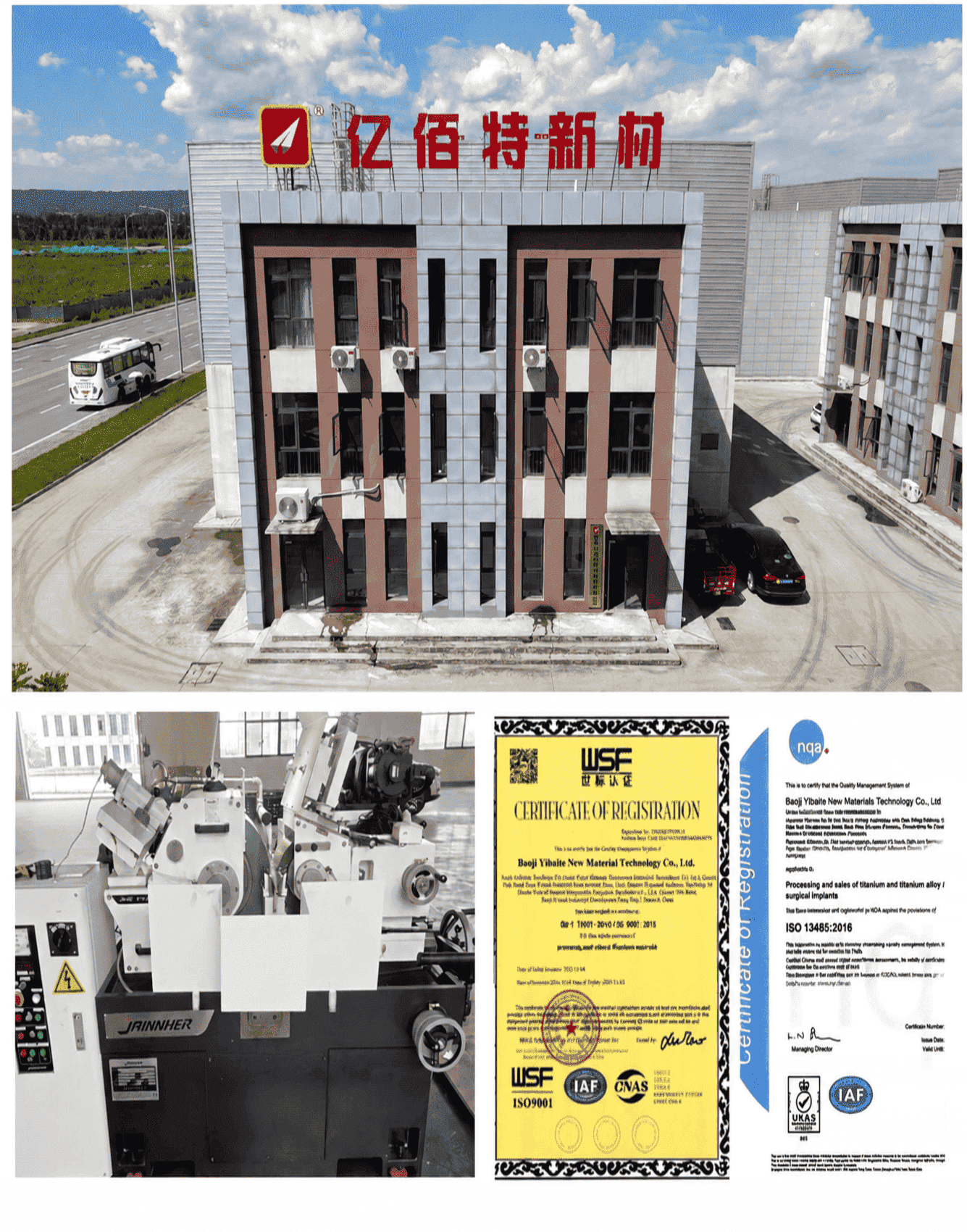
Baoji Yibaite New Materials Technology Co., Ltd. is a high-tech titanium processing company in Baoji, Shaanxi Province - China's Titanium Valley. We supply titanium materials used in defense, aerospace, marine, and industrial applications:
| Product | Defense Application |
|---|---|
| Titanium plates and sheets | Helmet shells, armor panels, structural components |
| Titanium bars and rods | Machined mounts, fasteners, weapon system hardware |
| Titanium wires | Retention clips, springs, welding consumables |
| Forgings | High-integrity structural components |
Grades available:
- Grade 2 - for corrosion-critical and general structural applications
- Grade 5 (Ti-6Al-4V) - for high-strength defense components
- Grade 6 (Ti-5Al-2.5Sn) - for armor and helmet applications - elevated temperature stability
- Grade 9 (Ti-3Al-2.5V) - for cold-formed and welded components
- Custom specifications upon request
All products ship with full mill test certificates - chemistry, mechanical properties, dimensions - traceable from ingot to delivered product.
The Takeaway
A titanium helmet does not just protect the soldier's head. It protects the soldier's performance - by removing the cumulative weight penalty that degrades alertness, reaction time, and endurance over hours of operation.
The protection level stays the same. The weight drops 30%. The soldier moves faster, reacts quicker, and stays sharper for longer.
In the calculus of combat, that advantage is not measured in grams. It is measured in seconds.