


The biggest enemy of field artillery and infantry weapons is not the opposing force - it is weight. Titanium alloy is solving that problem, one component at a time.

The Problem: Weight Kills Mobility
A mortar crew's greatest challenge is not aiming or firing - it is moving. Every kilogram of weapon weight translates directly into soldier fatigue, slower repositioning, and reduced combat effectiveness.
The same applies to firearms. A sniper carrying a 12 kg rifle through mountainous terrain for hours feels every additional gram. A flamethrower operator lugging steel tanks on his back moves slower, tires faster, and becomes more vulnerable.
The physics of the solution are straightforward: titanium alloy has roughly 56% the density of steel, with comparable tensile strength. Replace steel with titanium where it matters, and the weight drops immediately - without sacrificing performance.
Artillery: From Baseplate to Full Titanium
The first step: mortar baseplates
The mortar baseplate is one of the most heavily loaded and heaviest components of the entire weapon system. China has already deployed titanium alloy baseplates in service - and the effect is immediate. The baseplate is lighter, the entire mortar is lighter, and the crew can reposition faster with less physical strain.
Full-titanium mortars
Building on this foundation, China has developed two titanium alloy mortar variants - designated Type 83-1 and Type 83-2 - incorporating titanium across the weapon's major structural components. Both have demonstrated excellent performance and have been identified as a development direction for future artillery systems.
The cost barrier
Full titanium adoption in artillery remains limited by cost. A complete titanium mortar is significantly more expensive than its steel equivalent. But the trajectory is clear: titanium costs are declining, manufacturing processes are maturing, and the performance advantage is undeniable. Incremental adoption - baseplate first, then barrel, then full system - is the practical path forward.
Firearms: Broader Adoption, More Visible Impact
While artillery titanium is precision engineering for specific platforms, firearms titanium is becoming widespread across the infantry arsenal.

Components already in production
China has deployed titanium alloy in multiple firearm components at production scale:
- Tripods
- Receiver connectors
- Stock inserts
- Receiver tail sections
- Bipod mounting clamps
Individually, each component saves modest weight. Collectively, the savings are substantial - and they compound across the tens of thousands of weapons in a military inventory.
The world's first all-titanium machine gun
China has completed development of the world's only fully titanium alloy machine gun - a technical milestone that confirms the country's manufacturing capability for all-titanium weapons systems. While not yet in mass production due to cost, it demonstrates that the engineering barriers have been cleared.


International examples
The approach is not unique to China. The US M107 sniper rifle - effective range 2,000 meters, devastating firepower, but notoriously heavy - has been lightened by replacing the muzzle brake and barrel with titanium alloy components. Result: approximately 1.8 kg saved. For a sniper carrying the weapon through extended patrols, overwatch positions, and multi-hour missions, that weight reduction is immediately and tangibly felt.
Flamethrowers: a dramatic improvement
China's titanium flamethrower - fabricated from commercially pure titanium and a near-beta titanium alloy (Ti-451 equivalent) - weighs 3 kg less than the traditional steel version. For a back-carried weapon system, 3 kg represents a meaningful improvement in march speed, maneuverability, and combat endurance.

The Core Logic
The military titanium equation is simple:
| Factor | Steel | Titanium |
|---|---|---|
| Density | ~7.85 g/cm³ | ~4.51 g/cm³ |
| Strength | High | Comparable |
| Weight for same-strength part | Baseline | ~40% lighter |
| Corrosion in field conditions | Rusts without coating | Immune |
| Magnetic signature | Magnetic | Non-magnetic |
The value proposition is not "titanium is stronger than steel." It is "titanium delivers equivalent strength at dramatically lower weight" - which translates directly into soldier mobility, endurance, and effectiveness.
From Mortar Baseplates to Raw Material
Every titanium military component - whether a mortar baseplate, a rifle barrel, a machine gun receiver, or a flamethrower tank - begins as carefully processed titanium raw material. Plate for formed components. Bar and forging stock for machined parts. Wire for fasteners and springs.
The mechanical properties that a soldier depends on - strength, toughness, fatigue resistance under field conditions - all trace back to the quality of that starting material.
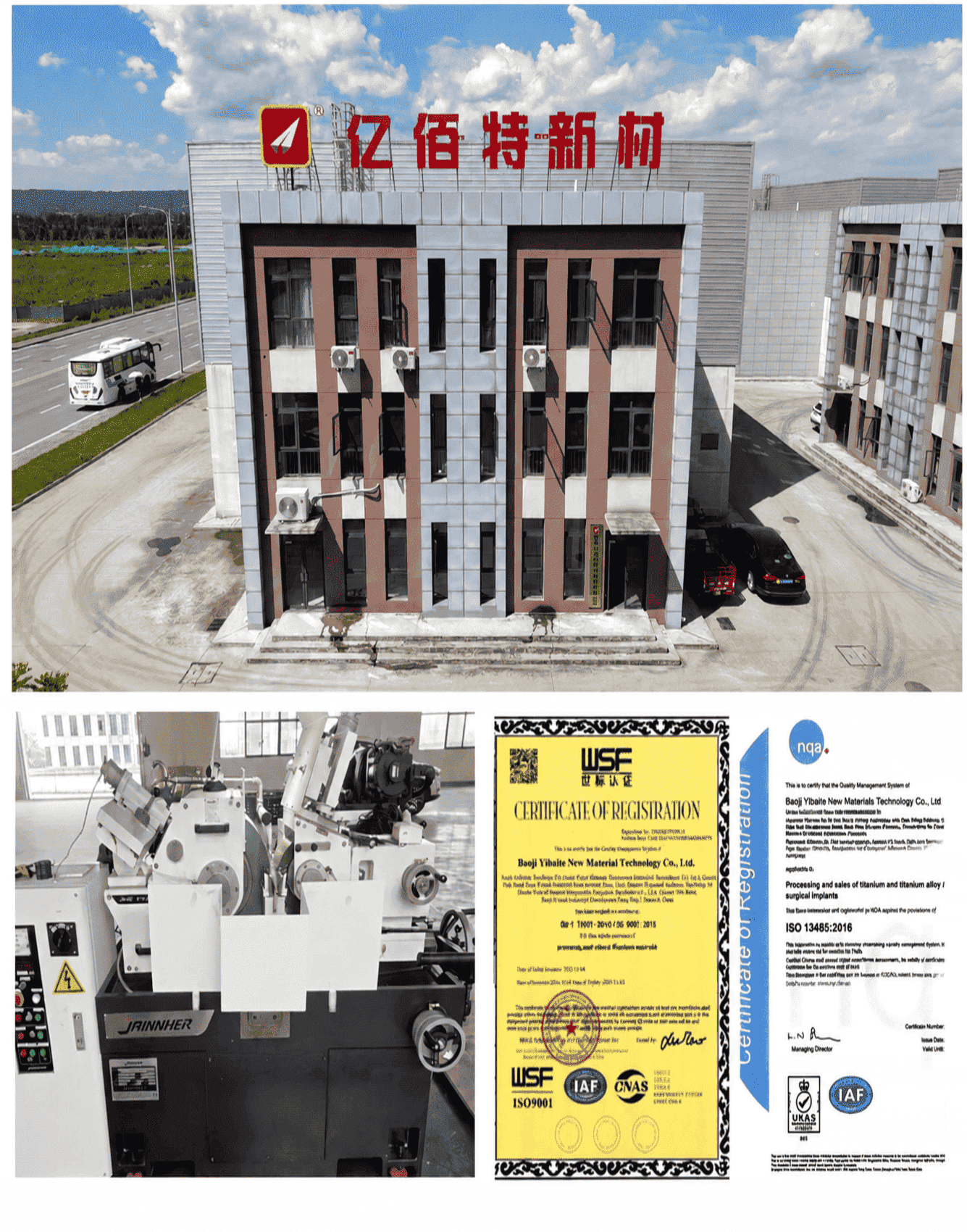
Baoji Yibaite New Materials Technology Co., Ltd. is a high-tech titanium processing company in Baoji, Shaanxi Province - China's Titanium Valley. We supply titanium materials used across defense, aerospace, and industrial applications:
| Product | Defense Application |
|---|---|
| Titanium plates and sheets | Structural panels, formed weapon components, armor-adjacent structures |
| Titanium bars and rods | Machined barrels, receivers, mounts, and high-strength structural parts |
| Titanium wires | Fasteners, springs, retention clips |
| Forgings | High-integrity structural components for weapons systems |
All products ship with full mill test certificates - chemistry, mechanical properties, dimensions - traceable from ingot to delivered product.
Conclusion
Titanium is not replacing steel across the entire military arsenal overnight. Cost prevents that. But the adoption path is clear: component by component, system by system, titanium is moving from special-purpose material to standard-issue lightweight solution.
From a mortar baseplate that lets a crew reposition faster, to a sniper rifle barrel that lets a marksman carry farther, to a flamethrower that lets an operator move quicker - titanium is doing what it does best: delivering the same strength at less weight, so the soldier carrying it can do more.
The technology is proven. The trend is irreversible. And it all starts with quality titanium material.